30+ Updates per Second per Account: Uber Scales Ledger Processing with Batching
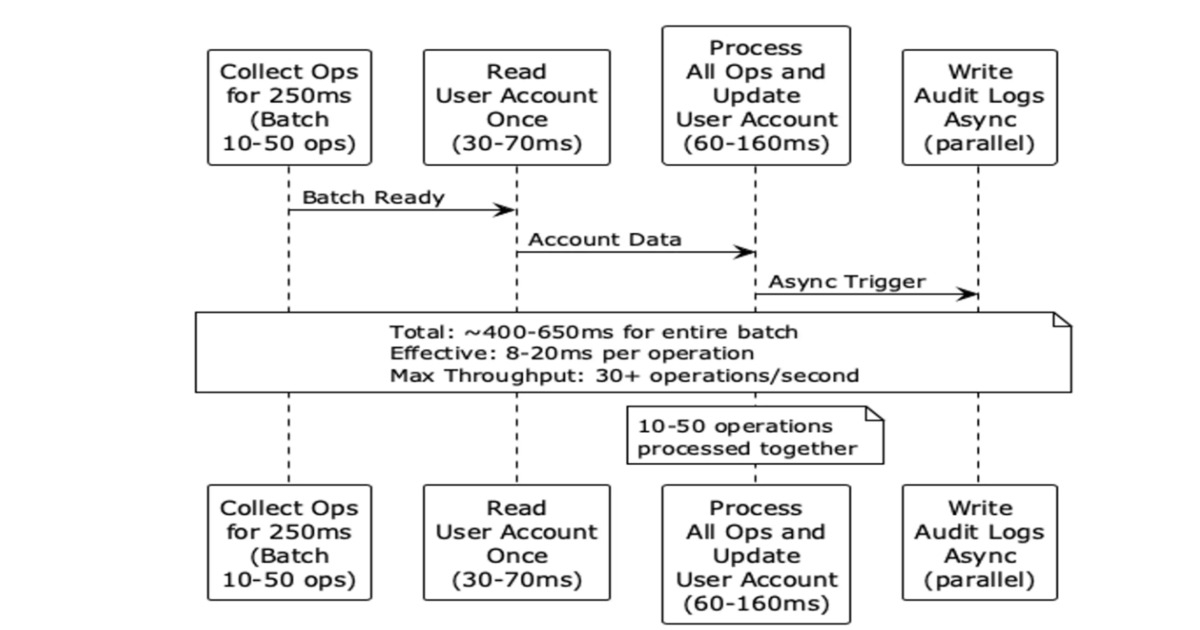
Uber introduced a high-throughput financial ledger processing system designed to handle hot account write contention at scale. Using 250ms batching, Redis coordination, and optimistic atomic updates, the system supports 30+ updates per second per account while preserving consistency and auditability, reducing multi-hour processing pipelines to minutes in its distributed accounting infrastructure. By Leela Kumili
The continuous growth of digital transactions and the increased demand for real-time financial accuracy necessitate advanced ledger processing solutions to handle 'hot' accounts efficiently.
This demonstrates a significant technical advancement in scaling high-throughput financial systems, crucial for industries reliant on rapid and consistent transaction processing like payments, ride-sharing, and e-commerce.
Traditional batch processing limitations are being overcome by new architectures that enable near real-time updates for high-contention accounts while preserving data integrity.
- · Large-scale digital platforms
- · Financial technology companies
- · Cloud infrastructure providers
- · Developers in distributed systems
- · Legacy financial processing systems
- · Companies unable to scale transaction throughput
- · Systems highly dependent on eventual consistency for critical operations
Uber's financial operations become more efficient and capable of handling greater transaction volumes with reduced latency.
Similar architectural patterns will likely be adopted by other high-volume transaction platforms, improving overall digital economy infrastructure.
This could accelerate the shift towards more real-time, high-accuracy financial reporting and auditing across various industries, impacting regulatory frameworks and compliance tools.
This signal links to a primary source. Continuum Brief monitors and indexes it as part of the live intelligence stream — we do not republish source content.
Read at InfoQ