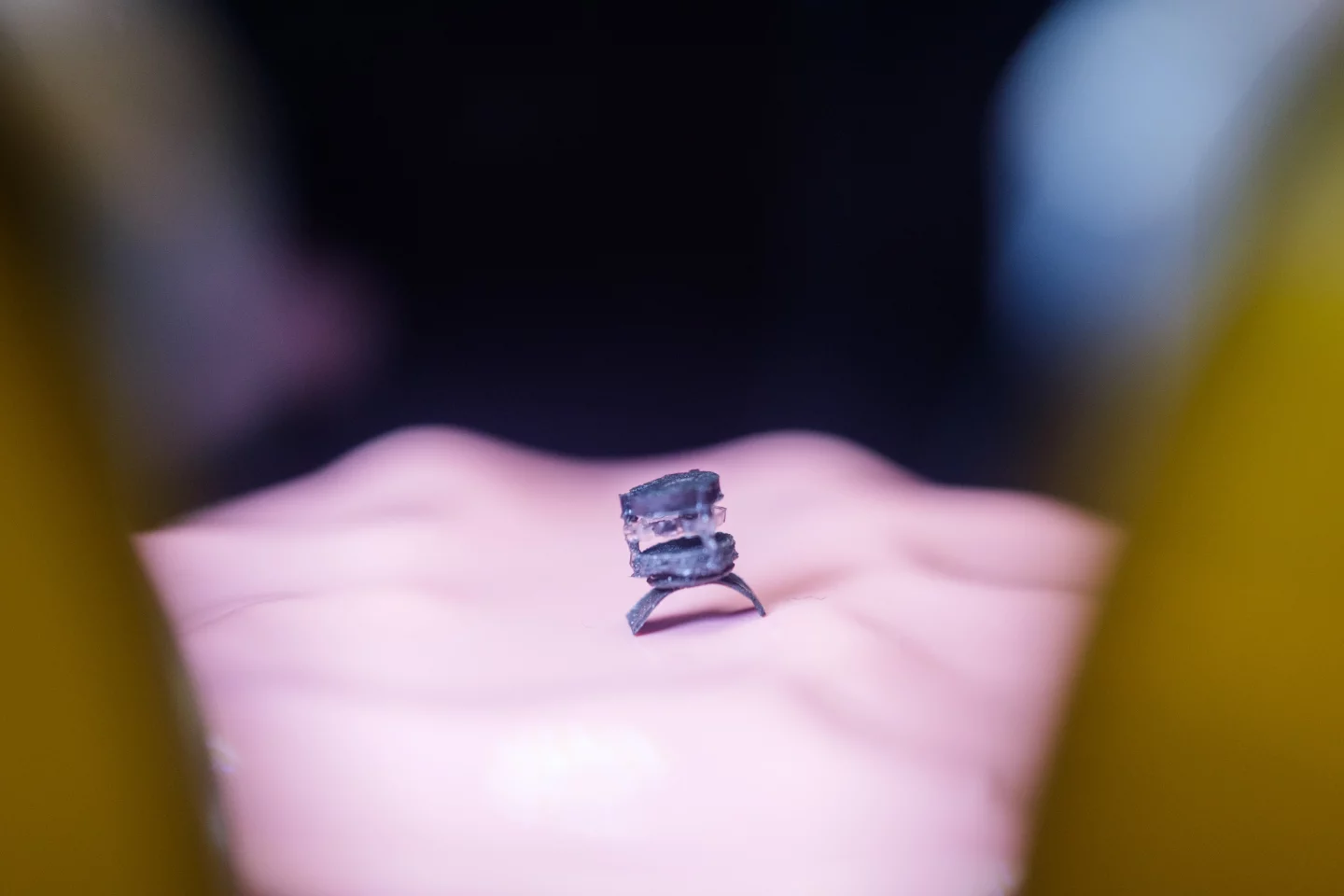
Picture a surgical robot that can move, cut tissue, release drugs, grip and store samples, and wirelessly generate heat. You most likely didn't imagine a robot that can fit in your hands. Yet, scientists have created a 5-in-1 robot that fits right on your fingertip! Continue Reading Category: Robotics , Engineering Tags: Nanyang Technological University , Drug delivery , Surgical robot
Miniaturization in robotics, coupled with advancements in materials science and wireless power transfer, is enabling the development of increasingly complex and tiny medical devices.
This development represents a significant step towards less invasive and extremely precise surgical interventions, potentially transforming medical procedures and patient recovery.
The ability to perform multiple surgical functions with a single, minuscule, untethered robot changes the paradigm for internal medical procedures, reducing trauma and extending access to hard-to-reach areas.
- · Minimally invasive surgery specialists
- · Medical device manufacturers
- · Patients requiring complex internal procedures
- · Drug delivery systems developers
- · Traditional open surgery equipment manufacturers
- · Hospitals optimizing for standard surgical suite layouts
Immediate adoption in niche surgical applications requiring extreme precision and minimal invasiveness.
Expansion into widespread use for various diagnostic and therapeutic procedures, reducing hospital stays and recovery times.
Potential for autonomous internal medical interventions, shifting healthcare models towards preventative and real-time internal monitoring and treatment.
This signal links to a primary source. Continuum Brief monitors and indexes it as part of the live intelligence stream — we do not republish source content.
Read at New Atlas — Robotics