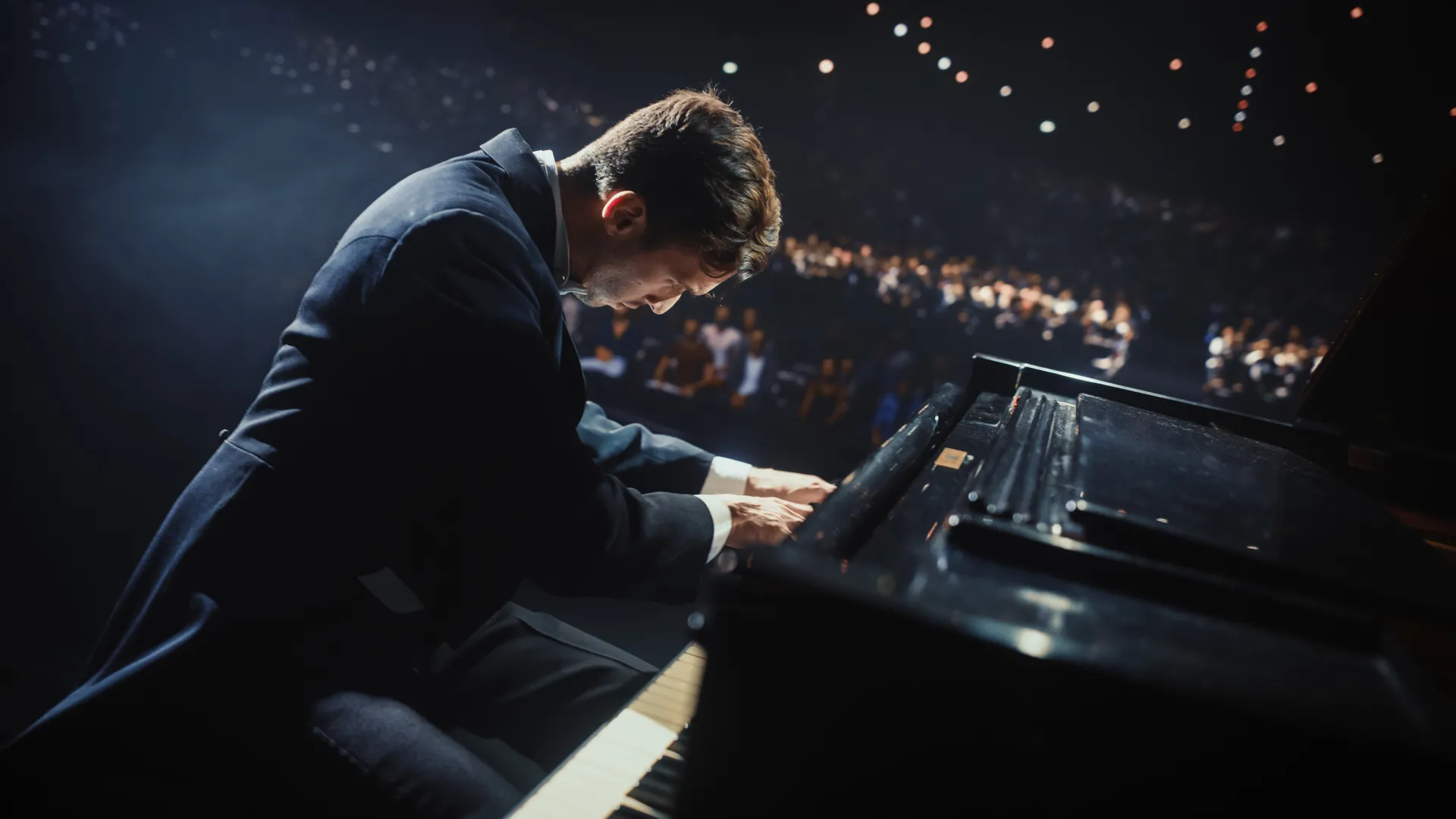
For more than a century, pianists and music teachers have argued over whether a performer’s touch can actually change the tone color of a piano note — and now scientists say the answer is yes. Using a cutting-edge sensor system that tracked piano key movements at 1,000 frames per second, researchers discovered that elite pianists subtly manipulate keys in ways that listeners can genuinely hear, even if they’ve never played piano before.
The development of advanced sensor technology, particularly high-speed key tracking systems, has enabled a scientific validation of a long-standing musical debate.
While interesting for musicology, this specific finding does not present significant implications for strategic geopolitical, economic, or technological decision-making.
Current understanding of piano acoustics and performance techniques is updated, affirming the nuanced skill of elite pianists in tone manipulation.
- · Musicologists
- · Piano manufacturers
- · Elite pianists
- · Skeptical music teachers
- · Researchers who previously argued against the 'performer's touch'
The scientific community now has empirical proof regarding the subtle manipulation of piano keys by performers for tonal variation.
This might lead to new pedagogical approaches for piano instruction, focusing on these subtle key manipulation techniques.
Future piano design could potentially incorporate sensor feedback to help learners master these nuanced expressive techniques.
This signal links to a primary source. Continuum Brief monitors and indexes it as part of the live intelligence stream — we do not republish source content.
Read at ScienceDaily — Robotics