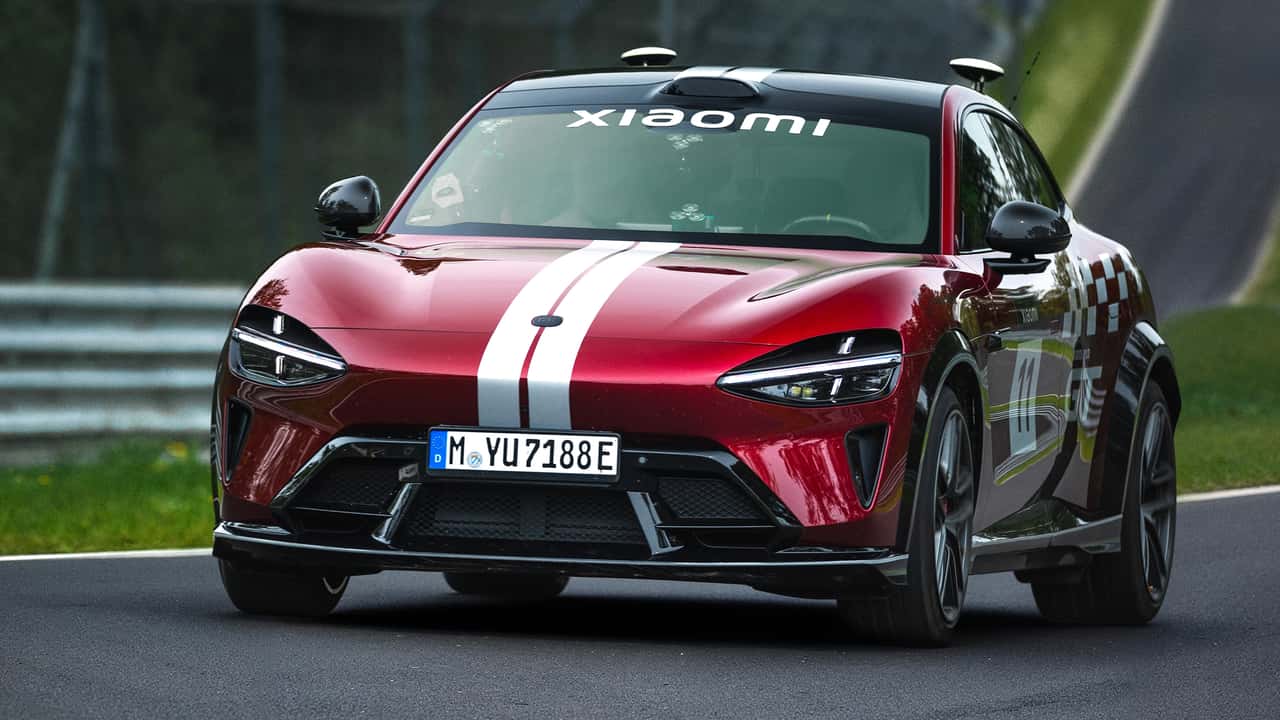
A 10-minute Nurburgring lap time isn't impressive. The fact that there is nobody in the driver’s seat is what makes this unique.
Advances in autonomous driving AI, coupled with robust sensor suites and vehicle control systems, have reached a point where high-performance environments like a racetrack can be navigated without human intervention.
This demonstration signifies a significant leap in the maturity and capability of autonomous driving systems, pushing beyond controlled road environments into dynamic and challenging performance scenarios.
The perception of where driverless technology can operate shifts from only public roads to potentially any complex driving environment, accelerating the timeline for full autonomy in various applications.
- · Xiaomi
- · Autonomous vehicle developers
- · AI software providers
- · High-performance EV manufacturers
- · Traditional driving instructors
- · Human race car drivers (long term niche)
- · Competitors with less advanced autonomous systems
Xiaomi gains significant brand recognition and validation for its autonomous driving technology.
Increased investment and competition in developing AI for extreme driving conditions and performance vehicles.
The development of 'ghost racing' leagues or autonomous vehicle testing as a new form of entertainment and engineering challenge.
This signal links to a primary source. Continuum Brief monitors and indexes it as part of the live intelligence stream — we do not republish source content.
Read at InsideEVs