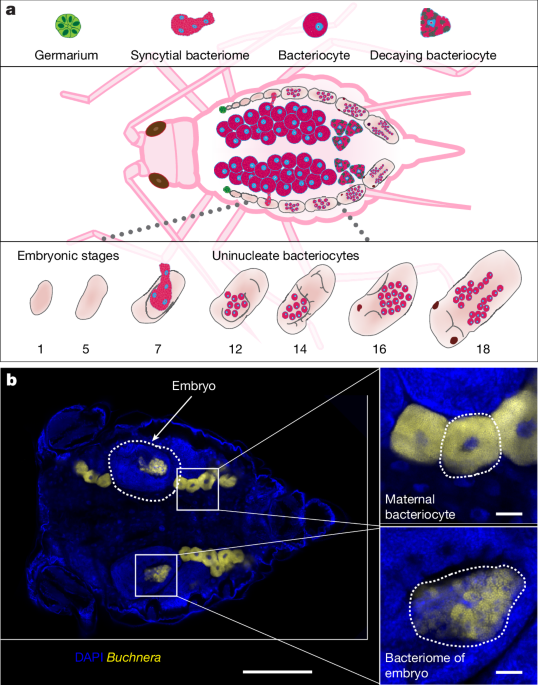
Nature, Published online: 01 July 2026; doi:10.1038/s41586-026-10711-4 SyeA was present in the Buchnera ancestor, is secreted into the host cytoplasm, is homologous to secreted effectors of bacterial pathogens and is essential for Buchnera transmission.
This research provides a breakthrough in understanding the mechanisms of host-microbe interactions, leveraging advanced biological techniques now available.
Understanding how endosymbionts establish and maintain relationships with hosts could unlock new avenues for manipulating biological systems, from medicine to agriculture.
The identified protein, SyeA, offers a concrete target for interventions that seek to control symbiotic relationships, potentially leading to novel therapeutic or agricultural applications.
- · Synthetic biology companies
- · Pharmaceutical research
- · Agricultural biotechnology
- · Academic researchers
- · Traditional pest control methods
- · Broad-spectrum antibiotics
Discovery of a key protein facilitating endosymbiont colonization.
Development of precise tools to engineer or disrupt host-microbe symbioses.
New classes of medicines or agricultural solutions based on manipulating symbiotic relationships for targeted outcomes.
This signal links to a primary source. Continuum Brief monitors and indexes it as part of the live intelligence stream — we do not republish source content.
Read at Nature — Latest Research