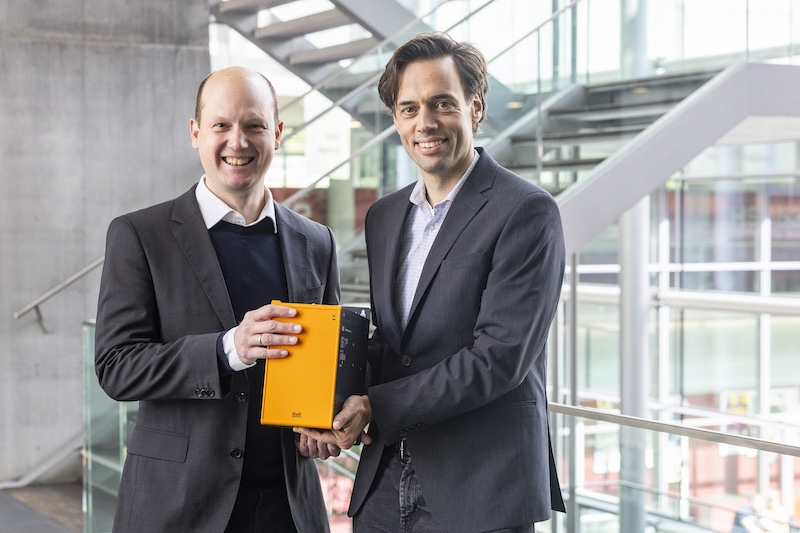
Salzburg University of Applied Sciences and ABB’s Machine Automation Division – B&R – are working together to apply artificial intelligence to improve energy efficiency in industrial automation. The collaboration, anchored in the Josef Ressel Center for Intelligent and Secure Industrial Automation (JRZ ISIA), focuses on translating advanced research into practical solutions for industrial drive systems. […]
The increasing push for sustainability and efficiency in industrial operations, combined with advancements in AI, makes optimizing energy use in robotics a timely and critical area of development.
Reducing energy consumption in industrial robots directly lowers operational costs, enhances sustainability metrics for manufacturers, and aligns with broader decarbonization goals.
The explicit application of advanced AI to optimize energy efficiency in industrial drive systems represents a concrete step towards more sustainable and cost-effective automation.
- · Industrial automation sector
- · ABB
- · Manufacturers adopting AI-optimized robotics
- · Energy efficiency technology providers
- · Inefficient industrial processes
- · High-energy-consumption robot manufacturers
Companies using industrial robots will see a reduction in their electricity bills and carbon footprints.
This innovation could drive further adoption of AI in manufacturing beyond just 'smart' operations, focusing on core resource optimization.
Widespread implementation might contribute to stabilizing grid demand, providing a small but growing relief to energy infrastructure under strain from overall electrification and compute growth.
This signal links to a primary source. Continuum Brief monitors and indexes it as part of the live intelligence stream — we do not republish source content.
Read at Robotics & Automation News