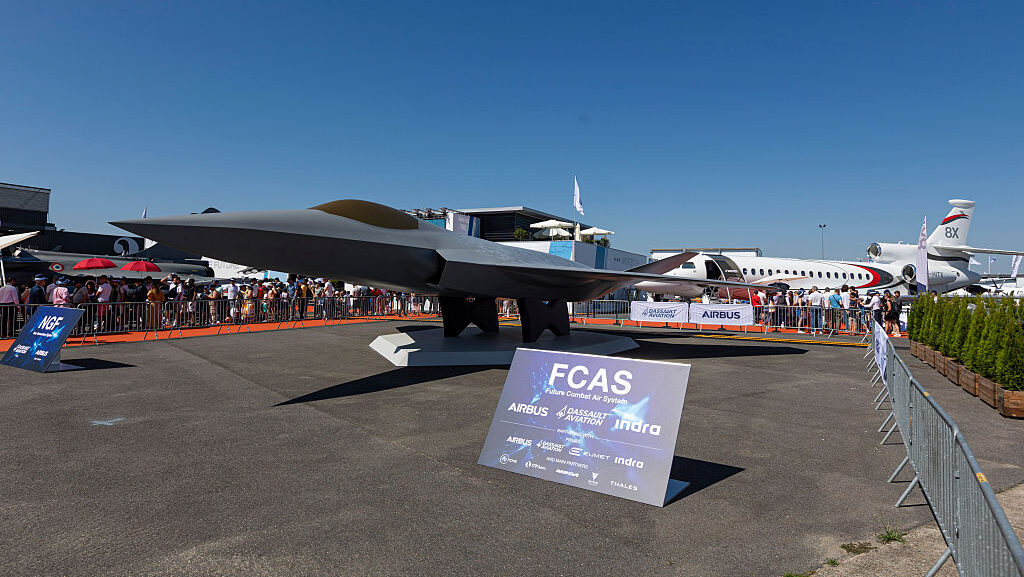
Jean-Brice Dumont, head of airpower at Airbus Defence and Space told reporters today that despite the FCAS fighter collapse, “we have not wasted our time,” stressing that technologies linked to the defunct plane can be reused.
The collapse of the FCAS project necessitates a new strategic direction for European airpower development, pushing entities like Airbus to redefine their future fighter strategies.
This indicates a recalibration of European defence industrial strategy, potentially leading to new alliances and development paths for next-generation combat aircraft, crucial for maintaining sovereign defence capabilities.
The focus shifts from the FCAS collaboration to a new, perhaps more nationally-aligned or differently structured, 'Team Gen 6' approach for developing future fighter technologies.
- · Airbus Defence and Space
- · European defence contractors (outside FCAS structure)
- · Defence tech R&D
- · Original FCAS partnership model
- · Legacy defence procurement processes
Airbus will likely pursue a modular or reconfigurable architecture for its future fighter concepts leveraging prior FCAS investments.
This collapse could spur greater national-level defence tech investments in countries like Germany and Spain, rather than purely multinational programs.
Increased competition among European nations for leadership in next-gen air combat systems may emerge, potentially fragmenting efforts or leading to new, smaller consortia.
This signal links to a primary source. Continuum Brief monitors and indexes it as part of the live intelligence stream — we do not republish source content.
Read at Breaking Defense — Air