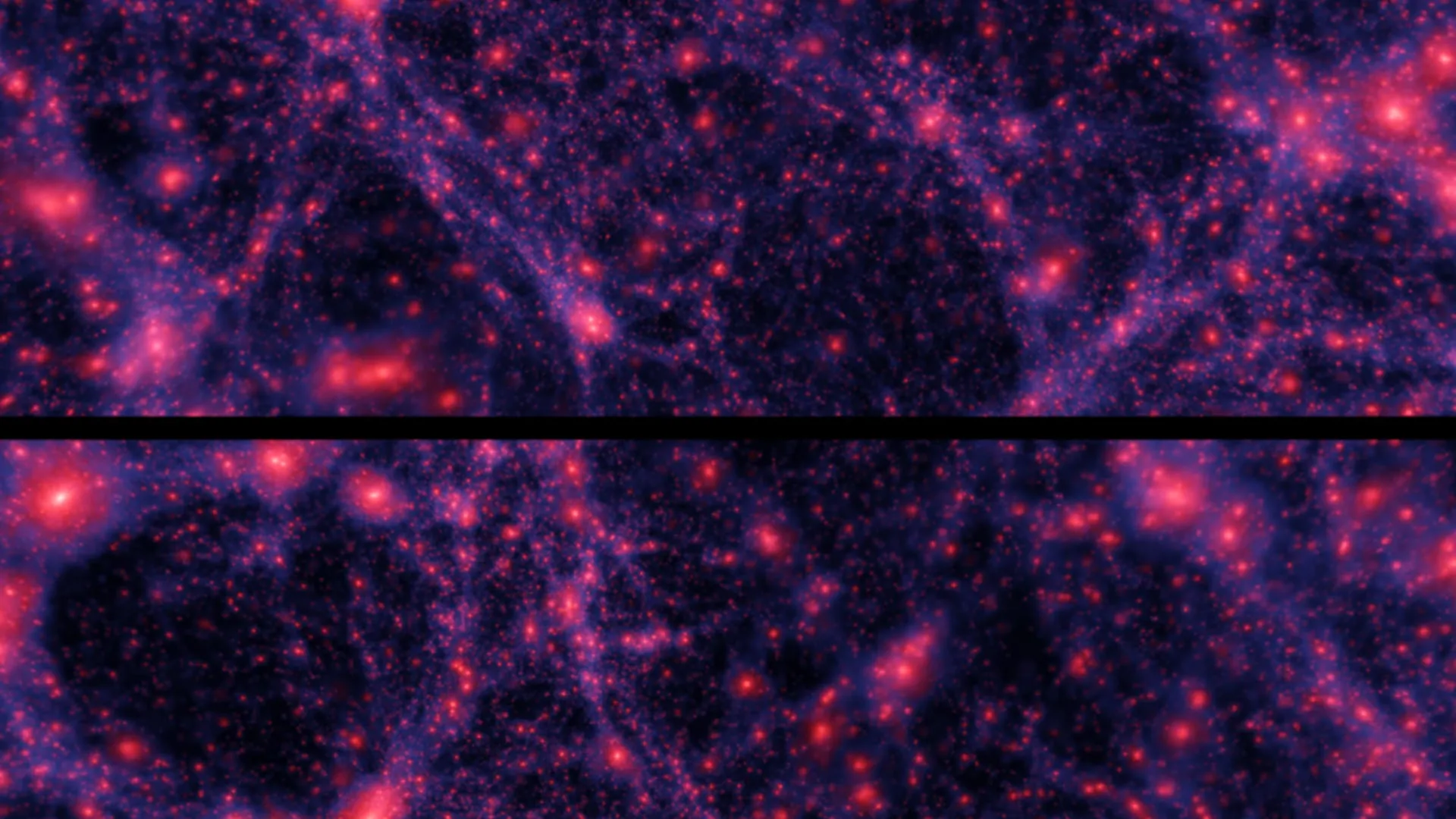
Scientists found that transfer learning can make the search for new physics in the universe much faster, slashing the need for expensive simulations. Yet the approach can backfire when AI relies too heavily on familiar patterns, potentially missing evidence of something truly new.
The increasing sophistication of AI models and the demand for accelerated scientific discovery are driving research into AI applications for complex problem-solving.
This development highlights both the immense potential of AI to speed up fundamental scientific research and the critical need for careful implementation to avoid overlooked discoveries.
Scientists can now leverage AI for significantly faster exploration of new physics, but must also develop methods to mitigate AI's bias towards familiar patterns.
- · AI research labs
- · Physics researchers
- · Space exploration agencies
- · Computational science
- · Traditional simulation-heavy research methods
AI significantly reduces the time and computational cost of exploring complex physics models through transfer learning.
Reduced simulation burden allows for more rapid hypothesis testing and validation in theoretical physics, potentially accelerating technological breakthroughs.
The identified 'catch' could lead to the development of 'curiosity-driven' AI algorithms specifically designed to seek out anomalies and unfamiliar patterns, creating new AI paradigms.
This signal links to a primary source. Continuum Brief monitors and indexes it as part of the live intelligence stream — we do not republish source content.
Read at ScienceDaily — Robotics