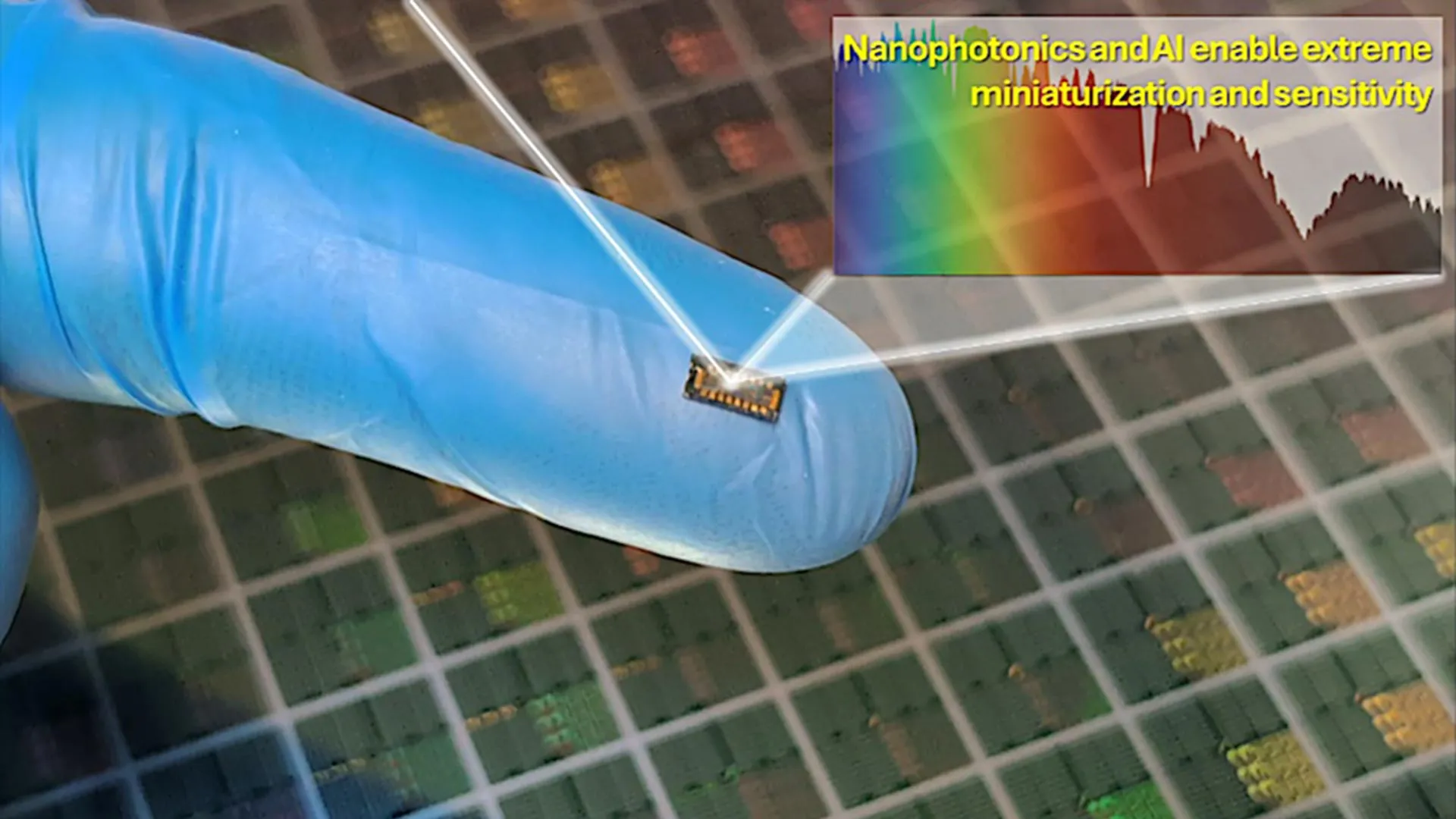
A new AI-powered chip from UC Davis can analyze light and chemicals using a device tiny enough to fit almost anywhere. By combining smart silicon sensors with machine learning, it achieves lab-style spectral analysis without the bulky equipment.
Advances in AI and miniaturization technologies are converging to enable significant breakthroughs in sensor and analytical capabilities, making this development timely.
This innovation offers a path to widespread, ubiquitous sensing and analysis, democratizing capabilities previously confined to large laboratories and specialized equipment.
Lab-grade spectral analysis can now be embedded into far more applications, devices, and environments, reducing costs and increasing accessibility.
- · IoT device manufacturers
- · Point-of-care diagnostics
- · Environmental monitoring agencies
- · Chemical and materials science
- · Manufacturers of bulky lab spectrometers
- · Centralized analytical lab services
- · Industries reliant on costly bespoke sensing
Widespread deployment of miniature, AI-powered spectroscopes for various industrial and consumer applications.
Reduced cost and increased speed of material identification, quality control, and health diagnostics at the edge.
New data streams and insights from real-time, ubiquitous chemical and light analysis, potentially leading to unforeseen scientific discoveries or product innovations.
This signal links to a primary source. Continuum Brief monitors and indexes it as part of the live intelligence stream — we do not republish source content.
Read at ScienceDaily — Robotics