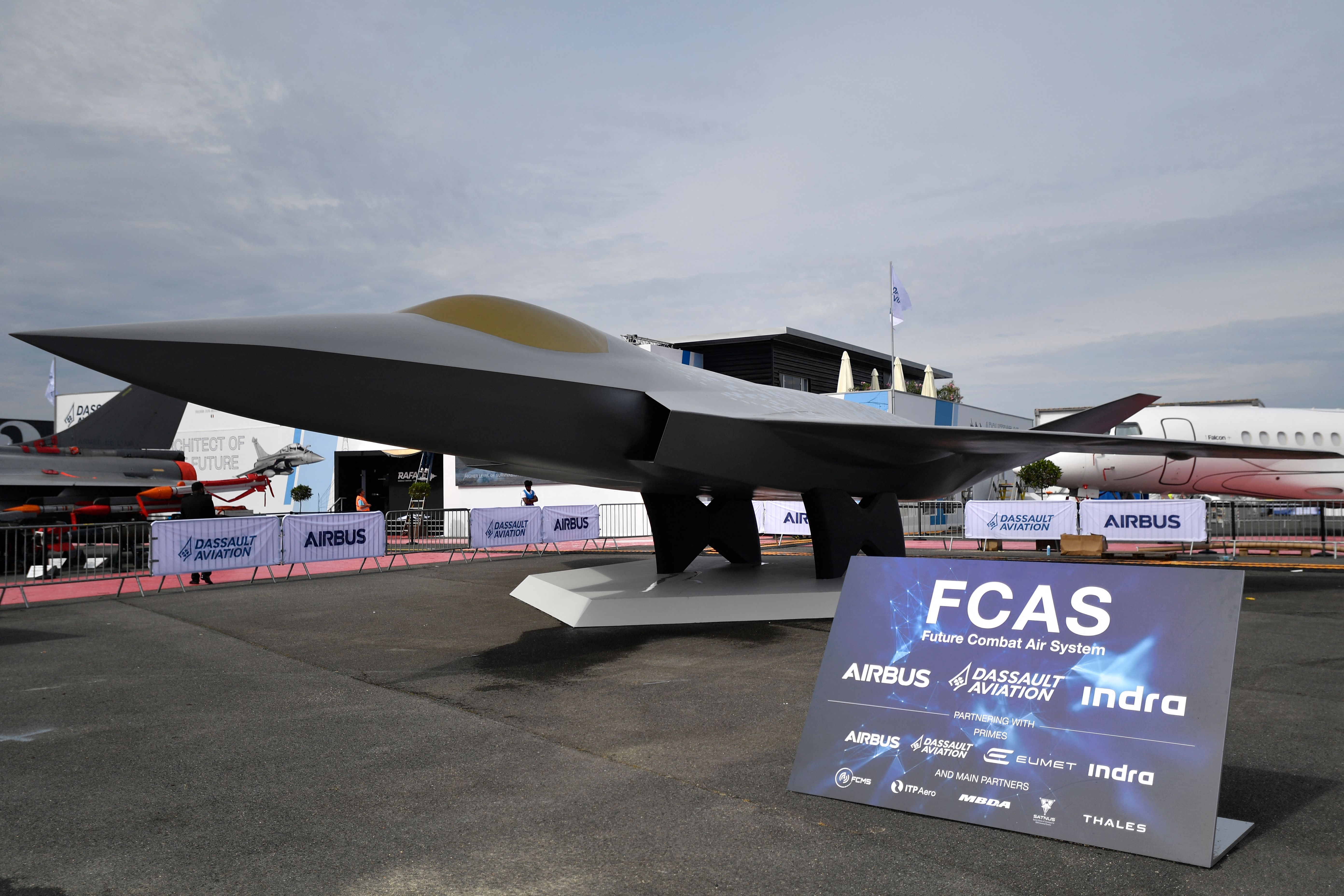
Industry sources said the move did not amount to an attempt to launch a new fighter project following the collapse of the Franco-German FCAS program.
The lobbying effort comes a week after Germany and France publicly admitted the collapse of their joint FCAS program, creating a vacuum in European fighter jet development.
This indicates a recalibration of European defense industrial strategies, with Germany potentially seeking new partnerships and a different approach to next-generation air power.
The explicit lobbying suggests a fragmented, potentially more competitive, landscape for future European fighter jet development, moving away from previous bilateral mega-projects.
- · Airbus
- · German defense industry
- · BAE Systems
- · Saab
- · Dassault Aviation
- · French defense industry
- · European defense integration
Germany will likely pursue a domestic or multi-national project, possibly including non-FCAS partners, to develop its next-generation fighter jet capabilities.
This fragmentation could lead to greater competition and potentially more cost-effective solutions, but also risks duplication of effort and reduced interoperability across European air forces.
The collapse of FCAS and subsequent national jockeying could prompt a broader re-evaluation of European security cooperation models, impacting other joint defense initiatives.
This signal links to a primary source. Continuum Brief monitors and indexes it as part of the live intelligence stream — we do not republish source content.
Read at Defense News