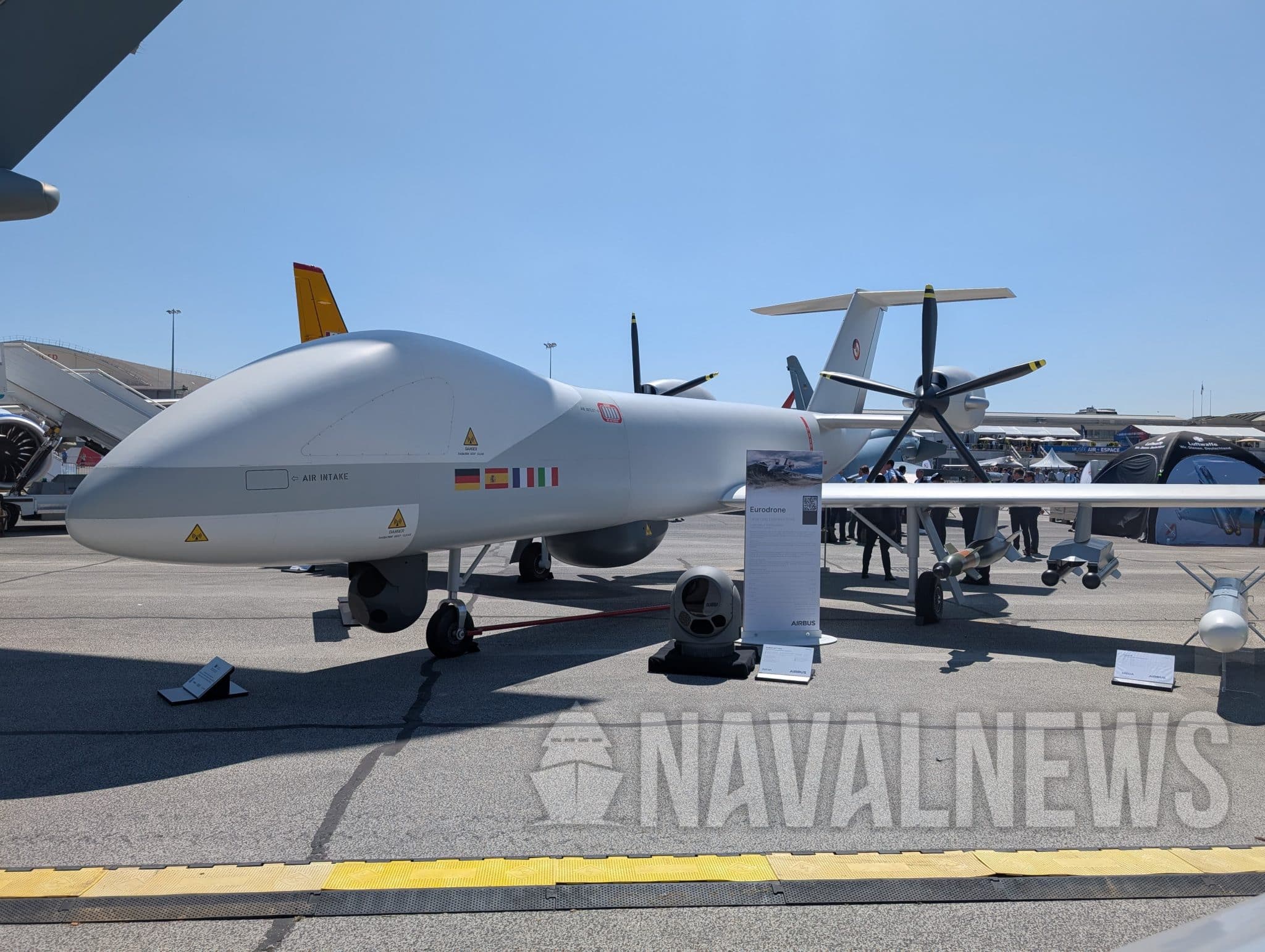
Airbus has signed a Memorandum of Understanding (MoU) with Kawasaki Heavy Industries. Under the MoU, Airbus, in cooperation with Kawasaki Heavy Industries, will analyse opportunities to work on a Japanese anti-submarine warfare variant of the U950 Eurodrone, Europe’s first Large Long Endurance Remotely Piloted Aircraft System (RPAS). Japan has held observer status in the Eurodrone programme ... The post Airbus signs MoU to explore Japanese anti-submarine variant of the Eurodrone appeared first on Naval News .
Amid increasing geopolitical tensions and a renewed focus on maritime security, European and Asian defense entities are accelerating collaboration on advanced military technologies.
This collaboration strengthens the defense industrial base of democratic nations by integrating advanced Unmanned Aerial Systems (UAS) into critical anti-submarine warfare capabilities, enhancing interoperability and reducing reliance on single-source suppliers.
A new pathway for the modular customization and international co-development of European defense platforms is established, potentially leading to varied national variants for critical military applications.
- · Airbus
- · Kawasaki Heavy Industries
- · European defense industry
- · Japanese defense capabilities
- · Traditional crewed ASW platforms
- · Competitors without similar international partnerships
The Eurodrone program gains a significant international customer interest and potential for specialization beyond its initial scope.
This partnership could pave the way for further European-Japanese defense technology collaborations, particularly in advanced drone and autonomous systems.
Increased adoption of large long-endurance RPAS for ASW could shift naval doctrines towards more persistent and cost-effective maritime surveillance and combat operations.
This signal links to a primary source. Continuum Brief monitors and indexes it as part of the live intelligence stream — we do not republish source content.
Read at Naval News