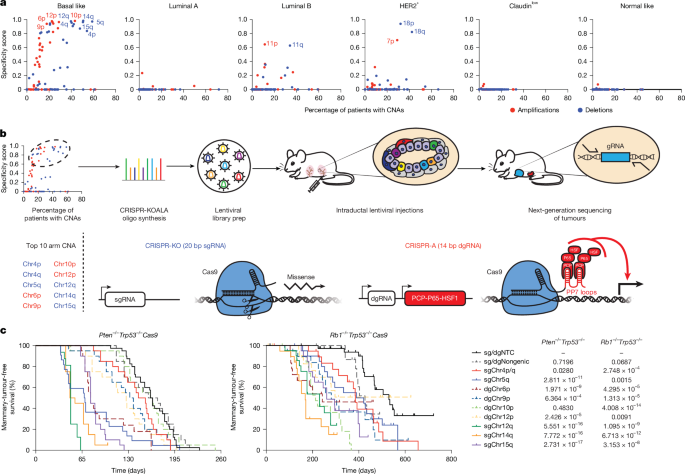
Nature, Published online: 08 July 2026; doi:10.1038/s41586-026-10752-9 Screening of chromosome arm-level aneuploidies uncovers that these alterations select for specific basal-like breast cancer driver genes, including PLGRKT, an oncogene whose tumour-promoting activity is associated with highly stress-resistant mitochondria and enhanced detoxification of reactive oxygen species.
This research provides a deeper understanding of how chromosomal alterations contribute to cancer development, specifically identifying a mechanism by which aneuploidy selects for specific driver genes associated with breast cancer resistance.
Understanding the fundamental genetic drivers of cancer, particularly mechanisms of resistance, is critical for developing more effective and targeted therapies, improving patient outcomes, and potentially preventing disease progression.
This research refines the understanding of breast cancer biology by identifying PLGRKT as an oncogene whose activity, linked to stress-resistant mitochondria, is selected for by aneuploidy, offering new targets for drug development.
- · Biotech companies focused on oncology
- · Pharmaceutical companies developing cancer therapies
- · Oncology research institutions
- · Patients with breast cancer
- · Breast cancers with PLGRKT upregulation
Identification of novel therapeutic targets for specific subtypes of breast cancer, particularly those characterized by aneuploidy and PLGRKT overexpression.
Development of diagnostic tools to screen for aneuploidy and PLGRKT expression in breast cancer, enabling more personalized treatment strategies.
Potential for new drug classes that target mitochondrial stress or reactive oxygen species detoxification in cancer cells, extending beyond breast cancer applications.
This signal links to a primary source. Continuum Brief monitors and indexes it as part of the live intelligence stream — we do not republish source content.
Read at Nature — Latest Research