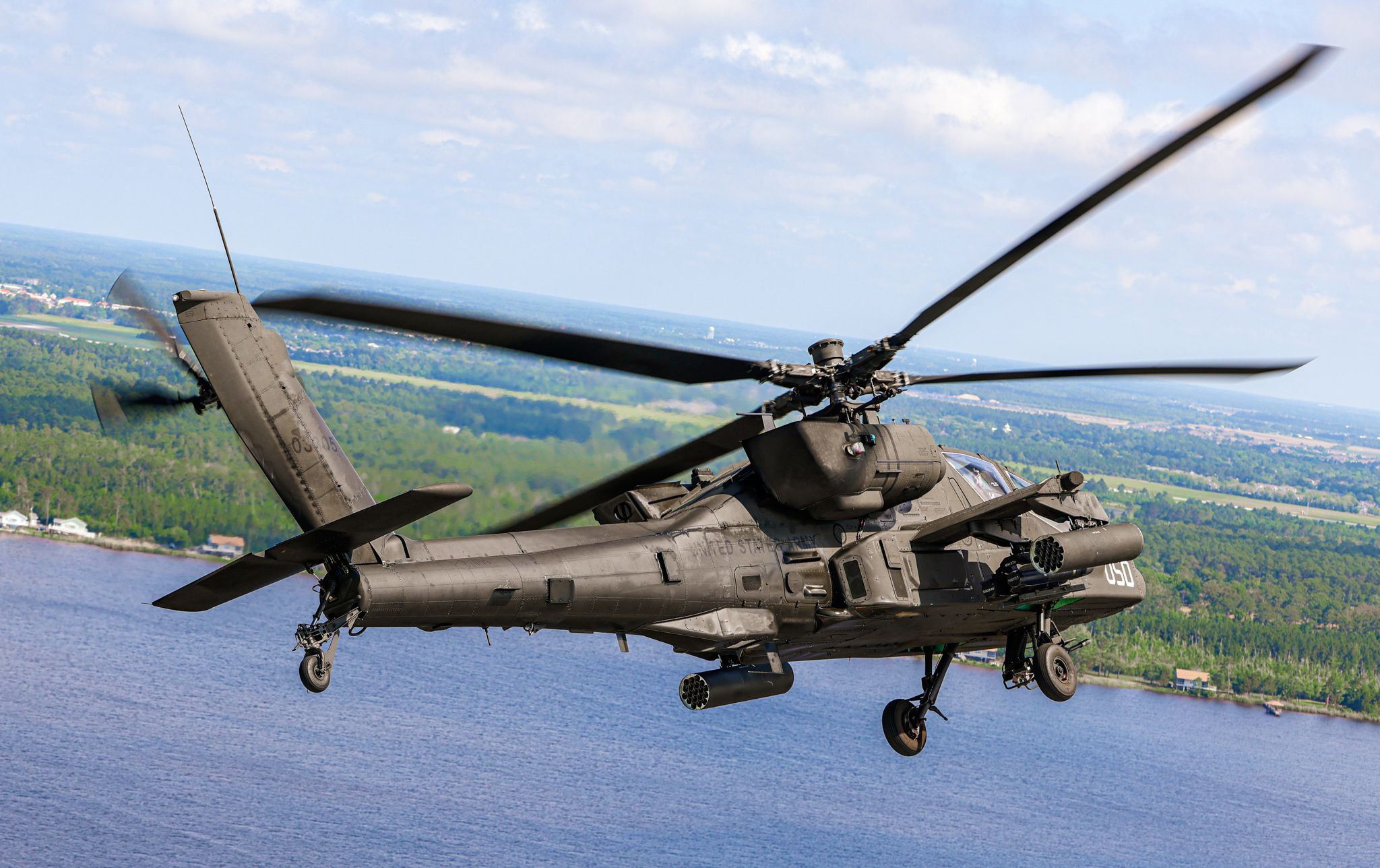
Experts say the U.S. Army Apache that went down near Oman offers a snapshot into how air assets must now contend with cheaper, rapidly evolving drones.
The incident involving a US Army Apache helicopter near Oman, attributed to rapidly evolving and cheaper drones, highlights a critical inflection point in modern air warfare as drone capabilities advance.
This event serves as a stark reminder for strategic readers that traditional, high-cost military assets are increasingly vulnerable to asymmetric threats, necessitating a reconsideration of defense procurement and strategy.
The perceived invincibility and cost-effectiveness of traditional manned aircraft for specific missions are now demonstrably challenged by the proliferation of advanced, low-cost autonomous systems.
- · Drone manufacturers (defense)
- · AI/autonomy developers
- · Defense contractors focused on EW/counter-drone systems
- · Nations with advanced drone capabilities
- · Legacy aerospace manufacturers
- · Manned aircraft proponents
- · Traditional air forces
- · Countries reliant on expensive conventional air power
Increased investment in counter-drone technologies and autonomous uncrewed systems across global militaries.
Accelerated obsolescence for certain categories of manned military aircraft, leading to re-evaluation of defense budgets.
A potential shift in geopolitical power dynamics as smaller nations or non-state actors gain disproportionate air denial capabilities.
This signal links to a primary source. Continuum Brief monitors and indexes it as part of the live intelligence stream — we do not republish source content.
Read at Army Times