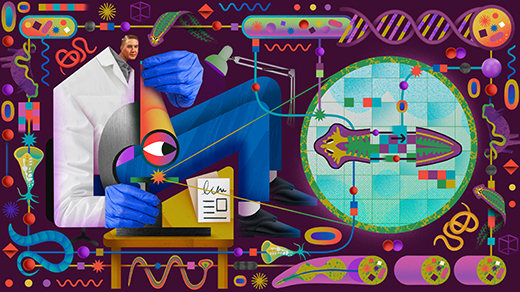
In the 1960s, worm-training experiments and their strange implications captivated the nation. Columnist Claire L. Evans follows the neuroscientists who attempted to recapture the magic. The post Are Memories Transferable — or Edible? first appeared on Quanta Magazine
The article revisits historical experiments amidst renewed interest in the biological basis of memory and the potential for memory manipulation, driven by advances in neuroscience and synthetic biology.
For a strategic reader, this signals the ongoing exploration into fundamental biological processes that could unlock new paradigms for learning, information transfer, and even human augmentation or treatment of neurological disorders.
The article suggests continued, albeit nascent, scientific inquiry into memory transfer mechanisms, potentially challenging conventional understandings of consciousness and information storage beyond neural networks.
- · Neuroscience researchers
- · Biotechnology firms
- · Pharmaceutical companies
- · Traditional learning methodologies
Renewed academic and public interest in memory-transfer research and its ethical implications.
Potential for new therapeutic approaches for memory-related diseases or cognitive enhancement.
Long-term societal debate on the definition of identity, consciousness, and the ethics of memory manipulation if successful transfer techniques emerge.
This signal links to a primary source. Continuum Brief monitors and indexes it as part of the live intelligence stream — we do not republish source content.
Read at Quanta Magazine