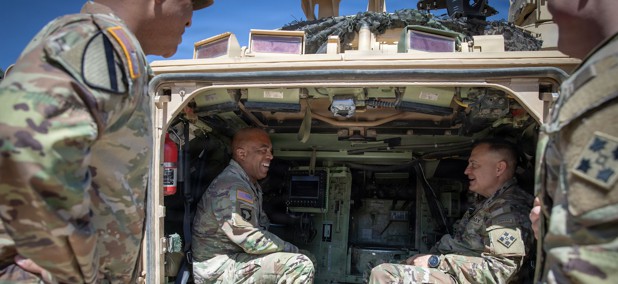
The effort will be led by Anduril, which ran NGC2 prototyping at 4th ID.
The Army's push towards next-generation command and control (NGC2) reflects an urgent need to modernize warfighting capabilities and integrate advanced technologies into existing structures, driven by evolving geopolitical threats and a competitive defense landscape.
This initiative signifies a critical step in the digital transformation of military operations, enabling faster decision-making, improved situational awareness, and enhanced coordination across large units, which is vital for future conflicts.
The adoption of NGC2 will enable more agile and data-driven command structures, moving away from traditional, slower hierarchical systems and significantly impacting how divisions operate and coordinate.
- · Anduril
- · Defense contractors focused on AI/software
- · US Military (Army)
- · Legacy defense tech providers
- · Adversaries with traditional C2 systems
Two Army divisions will gain enhanced command and control capabilities through the deployment of NGC2 by year's end.
The successful integration of NGC2 will likely accelerate its adoption across other military branches and allied forces, promoting interoperability and a new standard for modern warfare.
This technological shift could necessitate significant changes in military doctrine and training, fostering a new generation of soldiers proficient in AI-assisted decision-making and autonomous systems management.
This signal links to a primary source. Continuum Brief monitors and indexes it as part of the live intelligence stream — we do not republish source content.
Read at Defense One