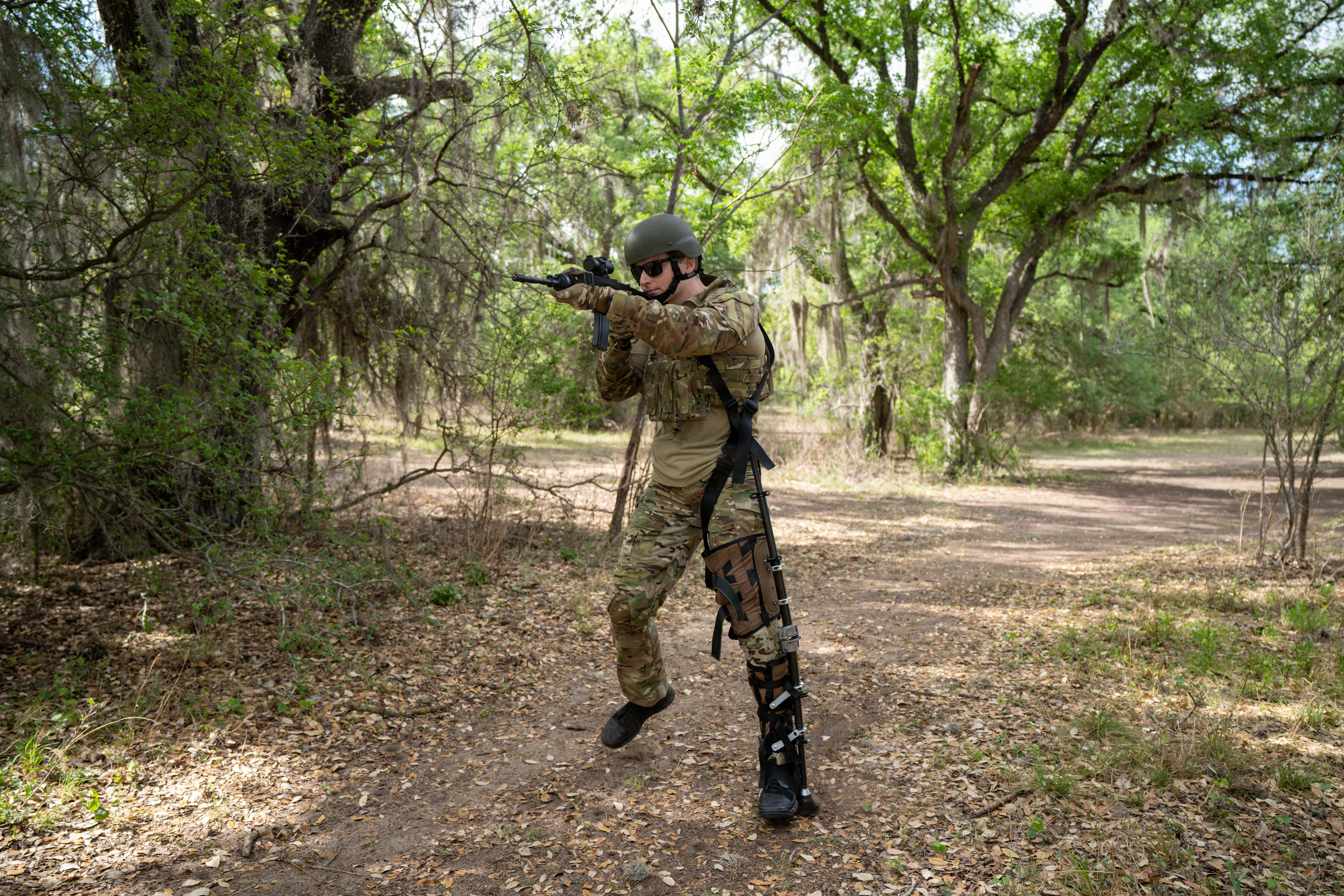
The Army is developing a new exoskeleton that allows injured troops to stand, walk and shoot when evacuation is impossible or delayed.
Ongoing advancements in robotics and materials science are enabling more practical and effective exoskeleton designs for military applications, driven by a need to improve combat casualty care and soldier survivability.
This development enhances soldier capabilities on the battlefield, potentially changing tactical dynamics and reducing the dependence on immediate medical evacuation, thereby extending combat effectiveness.
Injured soldiers may retain significant combat functionality, leading to modified casualty response protocols and a greater focus on individual soldier augmentation during conflict.
- · Defence contractors
- · Robotics companies
- · Military personnel
- · Adversaries unprepared for augmented soldiers
Injured soldiers can continue combat operations, altering traditional field medicine and evacuation priorities.
Increased survivability and reduced evacuation demands could lead to longer combat engagements and different logistical requirements.
The proliferation of such technology might escalate the 'arms race' in soldier augmentation, pushing militaries toward more advanced human-machine integration.
This signal links to a primary source. Continuum Brief monitors and indexes it as part of the live intelligence stream — we do not republish source content.
Read at Army Times