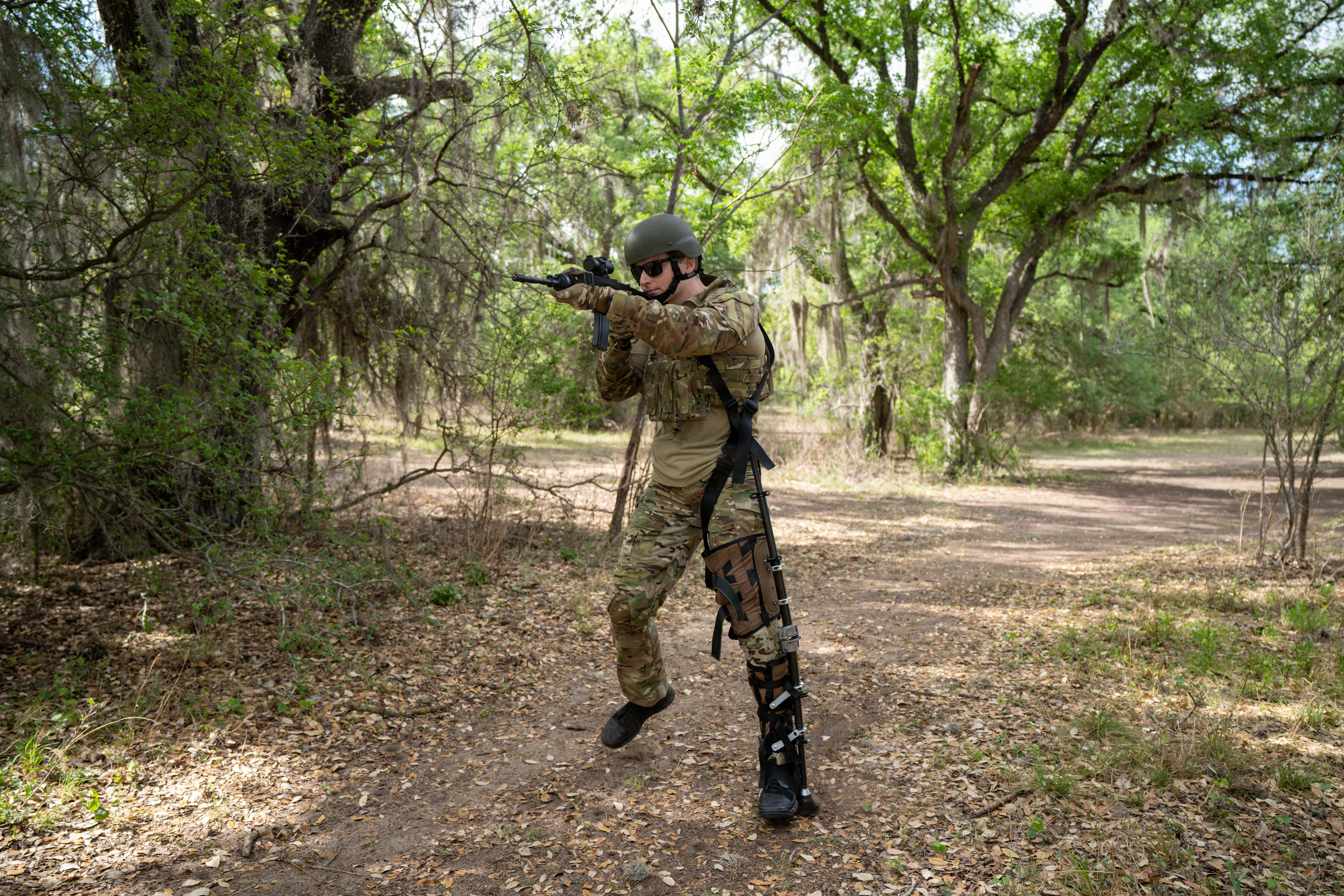
The Army is developing a new exoskeleton that allows injured troops to stand, walk and shoot when evacuation is impossible or delayed.
Advances in robotics, materials science, and battery technology are converging, making practical powered exoskeletons for military applications feasible for development programs now.
This development indicates a continued push towards enhancing soldier capabilities and survivability on the battlefield through advanced technology, impacting military doctrine and future conflicts.
The ability for injured soldiers to maintain combat effectiveness or facilitate movement without immediate evacuation fundamentally alters triage and operational parameters in conflict zones.
- · Defence contractors
- · Robotics engineers
- · Soldiers with lower-limb injuries
- · Opposing forces' medical and tactical assumptions
- · Traditional battlefield evacuation logistics
Injured soldiers gain enhanced mobility and combat capability when evacuation is not possible.
This technology could reduce combat fatalities and improve recovery rates for battlefield injuries, while potentially altering conventional medical evacuation protocols.
The proliferation of such systems could lead to a new arms race in soldier augmentation, pushing boundaries of human-machine integration and ethical debates around military cyborgs.
This signal links to a primary source. Continuum Brief monitors and indexes it as part of the live intelligence stream — we do not republish source content.
Read at Navy Times