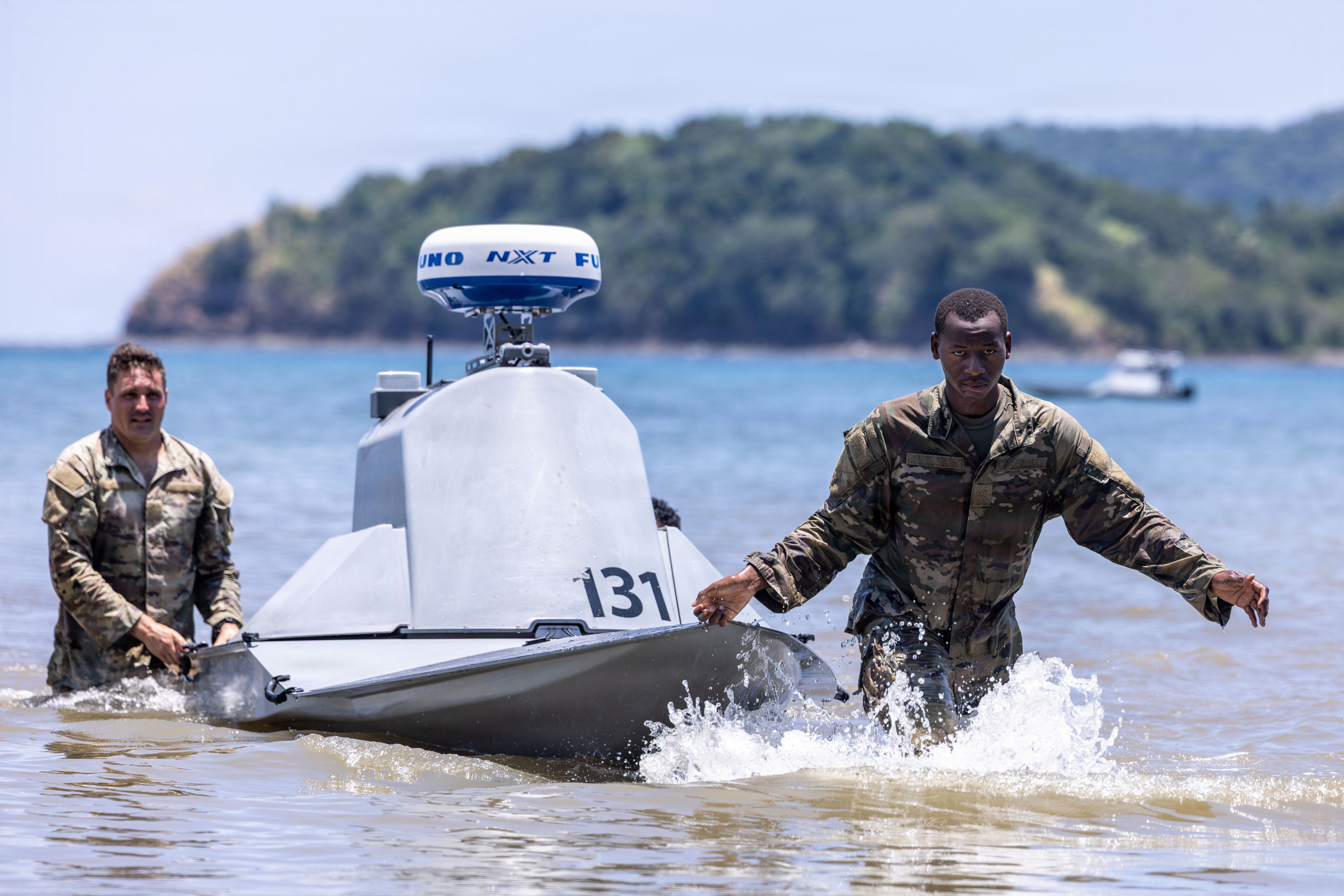
As the Army contends with a shortage of boats in the Pacific, it's looking at autonomous watercraft to fill the gaps.
Geopolitical tensions in the Pacific, particularly around Taiwan, are driving the US Army to rapidly enhance its naval capabilities and adapt to new forms of warfare.
This move highlights the acceleration of autonomous warfare and the pivot towards a more distributed, AI-enabled military posture in critical theaters, impacting defence spending and technological development.
The focus shifts towards rapidly fielding large numbers of autonomous systems to offset traditional shipbuilding timelines and manpower constraints, signaling a new era of naval projection.
- · Defence contractors specializing in autonomous systems
- · AI and robotics companies
- · Military forces adopting distributed warfare doctrines
- · Traditional large-ship naval manufacturers
- · Countries relying on conventional naval superiority
- · Opponents unprepared for autonomous swarming tactics
The US Army accelerates procurement and deployment of autonomous surface vessels.
This drives further innovation in AI, sensor fusion, and swarm intelligence for naval applications globally.
The proliferation of affordable, autonomous naval assets by various state and non-state actors destabilizes maritime security paradigms.
This signal links to a primary source. Continuum Brief monitors and indexes it as part of the live intelligence stream — we do not republish source content.
Read at Defense News