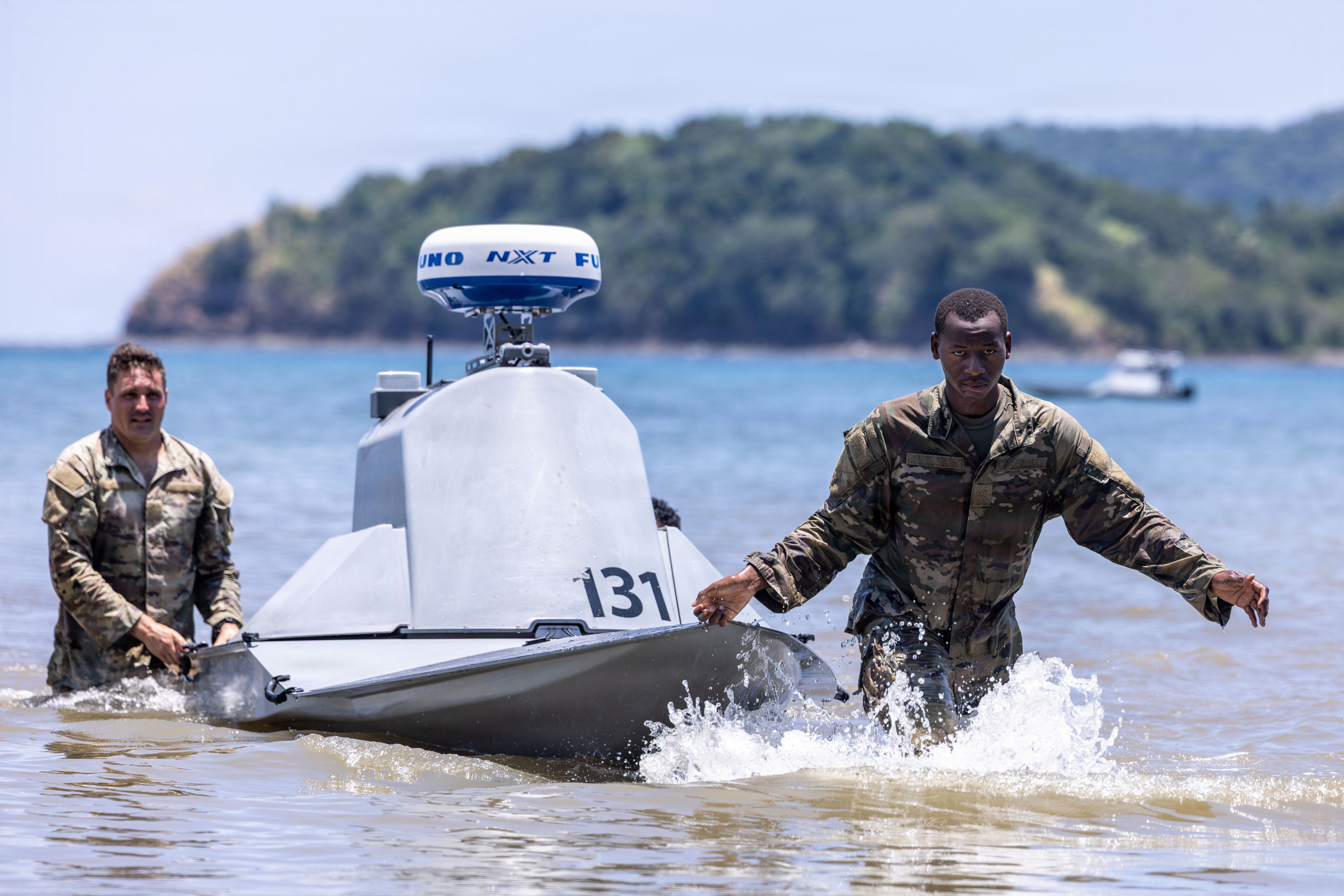
As the Army contends with a shortage of boats in the Pacific, it's looking at autonomous watercraft to fill the gaps.
Rising geopolitical tensions in the Indo-Pacific, coupled with advancements in autonomous maritime technology, are driving the Army's immediate need to close logistical and operational gaps.
This move highlights a broader strategic shift towards unmanned systems as force multipliers, impacting defense spending, industrial priorities, and the nature of naval warfare.
The Army's procurement strategy now explicitly includes autonomous watercraft for operational theater support, indicating a formalized recognition of their utility beyond traditional naval roles.
- · Defense autonomous systems manufacturers
- · Robotics industrial complex
- · US Army's Indo-Pacific command
- · Software and AI defense contractors
- · Traditional manned naval vessel manufacturers
- · Legacy defense acquisition processes
- · Adversaries with limited autonomous counter-measures
The immediate effect is increased investment and development in autonomous maritime platforms for military applications.
This could lead to a restructuring of logistics and combat doctrine around distributed, autonomous naval assets, potentially altering regional power balances.
Long-term, the widespread adoption of AI-driven autonomous fleets may reduce the human element's role in certain operational theaters, impacting training requirements and ethical frameworks for warfare.
This signal links to a primary source. Continuum Brief monitors and indexes it as part of the live intelligence stream — we do not republish source content.
Read at Army Times