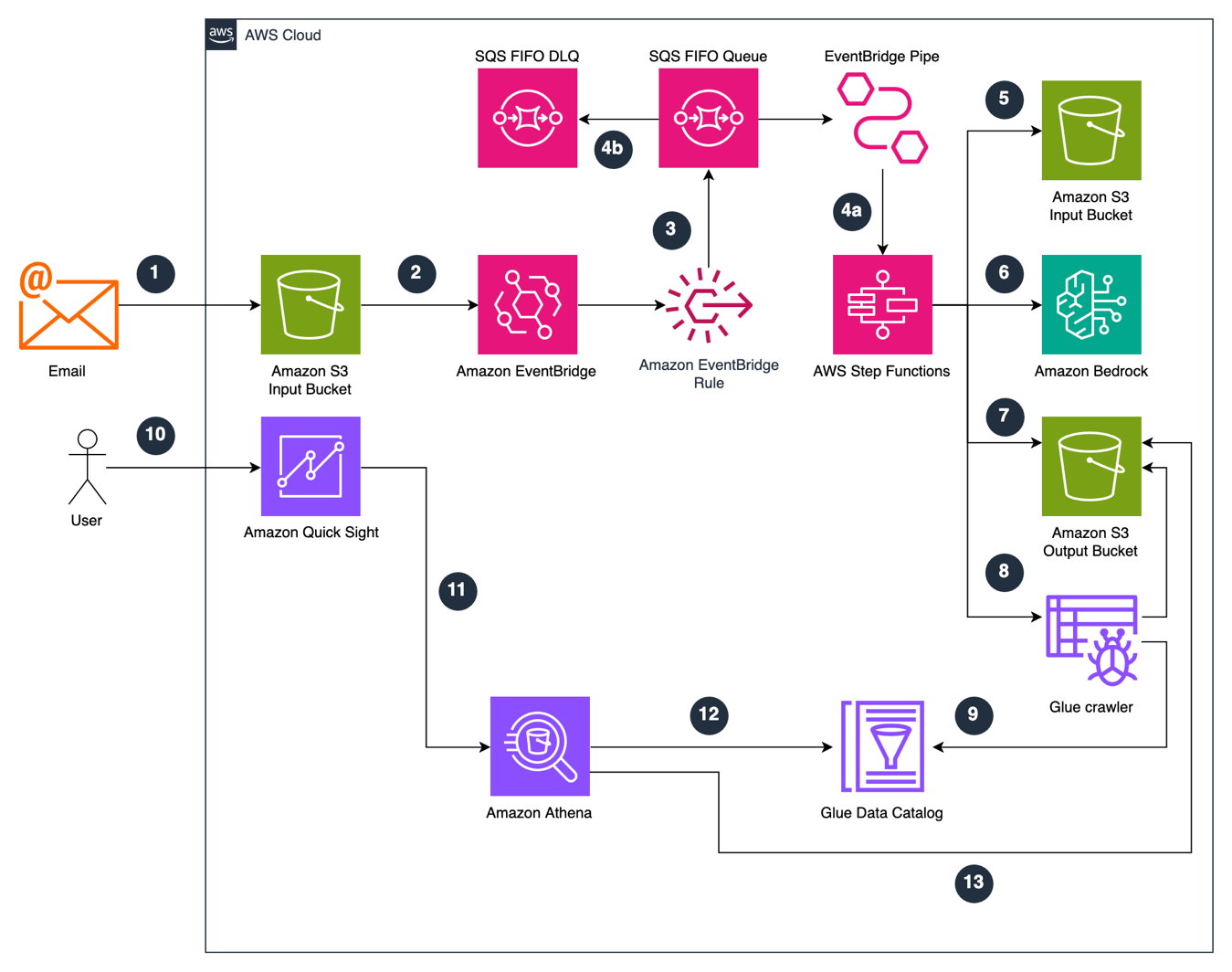
In this post, we show how organizations in the public sector can automate their email management using a generative AI solution powered by Amazon Bedrock.
The proliferation of generative AI capabilities and accessible platforms like Amazon Bedrock enables practical integration into daily workflows, making solutions like automated email management increasingly viable for organizations. The public sector's ongoing need for efficiency and resource optimization provides a strong impetus for adopting such AI-powered tools.
This development signals the continued penetration of generative AI into institutional workflows, particularly within the public sector, by demonstrating a tangible application for improving administrative efficiency. Strategic readers should consider how similar AI agent applications will transform white-collar productivity and reshape organizational structures.
Organizations, especially in the public sector, now have a clearer pathway to implementing immediate productivity gains in administrative tasks through accessible generative AI services. This shifts the focus from experimental AI deployments to practical, integrated solutions for workflow automation.
- · AWS
- · Public sector organizations
- · AI software developers
- · Productivity software market
- · Legacy email management solution providers
- · Manual administrative staff
- · Organizations slow to adopt AI
Public sector entities will experience immediate efficiencies in email handling and information triage, allowing resources to be reallocated.
Increased reliance on AI for administrative tasks will highlight new challenges in data privacy, security, and algorithmic bias within government operations.
The successful deployment of such solutions could accelerate broader AI adoption across critical government functions, extending beyond administrative support to policy analysis and public service delivery.
This signal links to a primary source. Continuum Brief monitors and indexes it as part of the live intelligence stream — we do not republish source content.
Read at AWS Machine Learning Blog