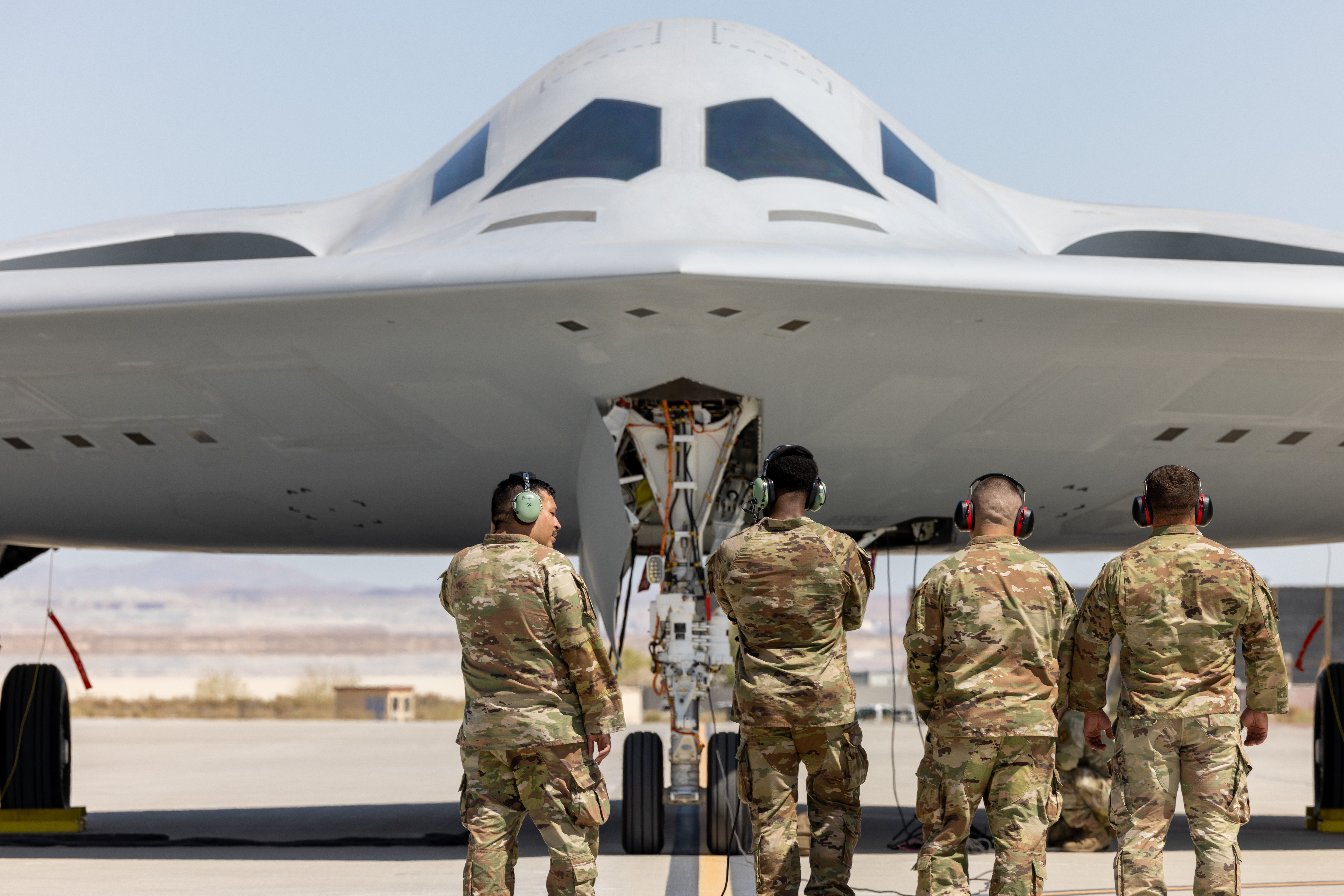
The Air Force's new long-range strike bomber will operation with a two-pilot configuration.
The B-21 Raider is nearing operational deployment, and the Air Force is solidifying its crew configuration for this advanced stealth bomber.
This configuration decision impacts personnel requirements, training, and the long-term operational philosophy for next-generation strike platforms, emphasizing crewed mission complexity.
The B-21's explicit two-pilot configuration confirms a continued reliance on human-in-the-loop decision-making for complex strike missions, rather than fully autonomous or single-pilot designs prevalent in some discussions.
- · Air Force pilots
- · Defence contractors involved in human-machine interface development
- · Traditional aviation training programs
- · Advocates for single-pilot or fully autonomous strike aircraft
The Air Force will proceed with training and personnel allocation for two-person crews on the B-21.
This decision might influence future aircraft designs to prioritize multi-person crews where mission complexity requires it, potentially slowing fully autonomous combat aircraft development.
It could reinforce the necessity of advanced human-machine teaming (HMT) research to optimize crew workload and effectiveness, rather than replacing crews entirely.
This signal links to a primary source. Continuum Brief monitors and indexes it as part of the live intelligence stream — we do not republish source content.
Read at Air Force Times