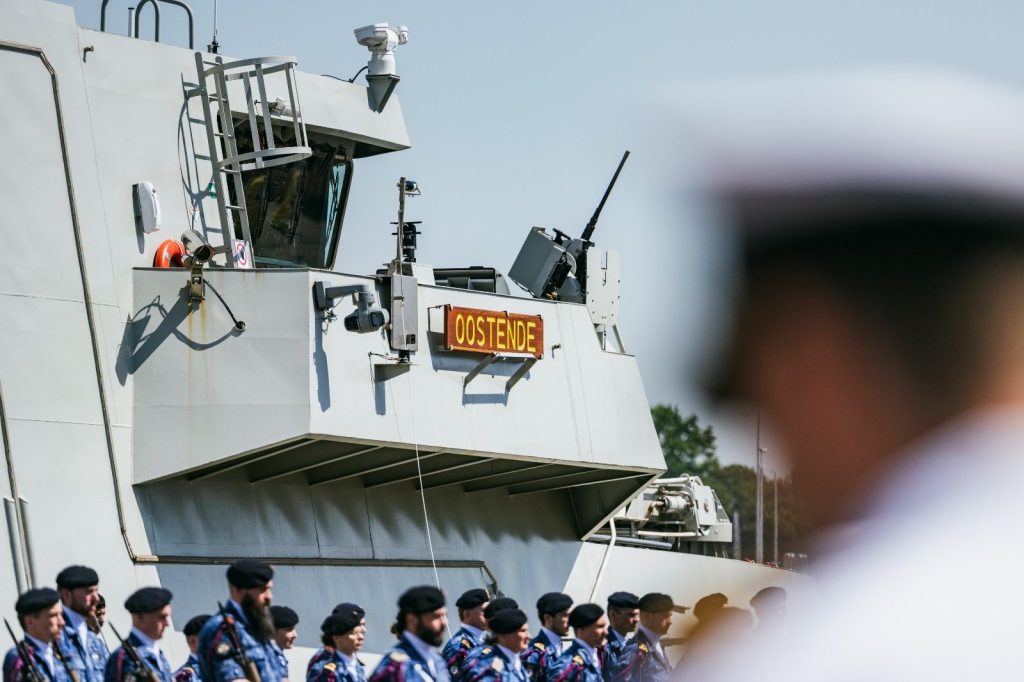
The joint Belgian-Dutch replacement Mine Countermeasures (rMCM) programme continues to make progress towards demonstrating its full stand-off mine warfare capability before the end of 2026, with recent ship and system deliveries paving the way for a critical phase of operational integration. Speaking at the recent Navy Leaders Combined Naval Event (CNE) 2026, Commander Pierre Van ... The post Belgian-Dutch rMCM programme enters critical integration phase appeared first on Naval News .
The Belgian-Dutch rMCM program is entering a critical integration phase, indicating accelerated progress towards deploying advanced mine warfare capabilities.
This development signifies a substantial step forward in modern naval defence, enhancing capabilities to counter maritime threats through stand-off autonomous systems.
Naval forces in Europe are increasingly adopting uncrewed and autonomous systems for critical operations like mine countermeasures, shifting from traditional crewed platforms.
- · Belgian Navy
- · Dutch Navy
- · Defence Tech Sector
- · European NATO Allies
- · Navies reliant on legacy mine warfare systems
- · Manufacturers of traditional mine countermeasure vessels
The successful integration will lead to the operational deployment of advanced stand-off mine warfare capabilities by Belgian and Dutch navies.
Other NATO nations will likely accelerate their own autonomous mine warfare programs, seeking similar technological advantages.
This could contribute to a broader shift in naval doctrine, emphasizing distributed, autonomous, and networked approaches to maritime security across allied forces.
This signal links to a primary source. Continuum Brief monitors and indexes it as part of the live intelligence stream — we do not republish source content.
Read at Naval News