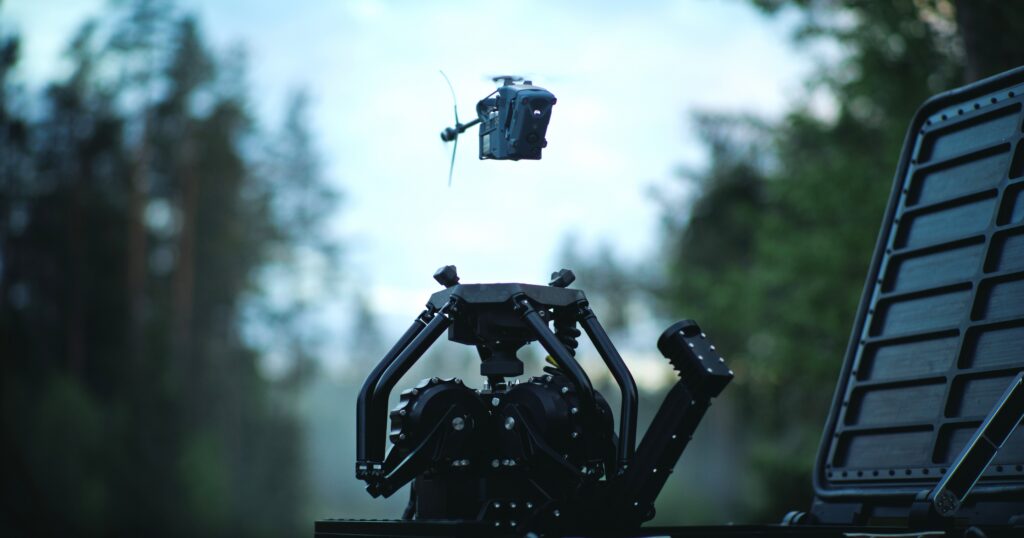
The drone, which weighs less than 450 grams, has flight time of up to an hour and can hit a top speed of around 55 miles per hour, per the company.
The continuous evolution of drone technology for military applications is driven by ongoing conflict lessons and rapid innovation cycles, as evidenced by its unveiling at EUROSATORY 2026.
This development signifies further miniaturization and enhanced capabilities for tactical reconnaissance, directly impacting troop safety and situational awareness in land warfare scenarios.
The deployment of highly portable and capable microdrones will enable more ubiquitous and stealthy ISR (Intelligence, Surveillance, Reconnaissance) at the squad level, changing frontline operational dynamics.
- · Teledyne FLIR
- · Land warfare forces
- · Military drone manufacturers
- · Soldiers (increased ISR capabilities)
- · Traditional manned reconnaissance units
- · Adversaries lacking similar drone tech
- · Bulkier ISTAR systems
Widespread adoption of microdrones for tactical reconnaissance across Western armies.
Increased demand for counter-drone technologies as microdrone proliferation rises.
Shift in military doctrine towards decentralized, drone-augmented small unit operations.
This signal links to a primary source. Continuum Brief monitors and indexes it as part of the live intelligence stream — we do not republish source content.
Read at Breaking Defense