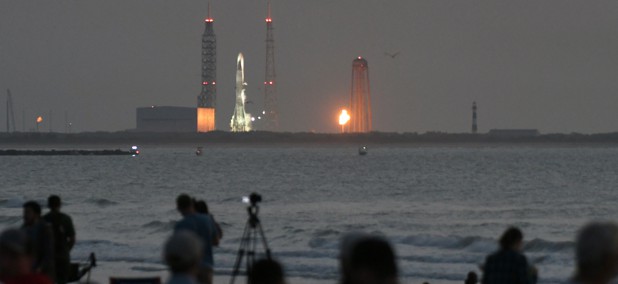
Space Force efforts to breed more competitors aren’t keeping up with ever-increasing demand for rockets.
The explosion underscores a critical bottleneck in the Space Force's efforts to diversify its launch providers and increase national security launch capacity, a problem exacerbated by ongoing geopolitical tensions and increased demand.
A strategic reader should care because continued launch failures highlight the fragility of military space access, threatening timely satellite deployment for intelligence, communication, and navigation capabilities.
This incident elevates concerns about the reliability of a key emerging launch provider and may force a re-evaluation of current diversification strategies, potentially leading to increased reliance on established players or greater internal investment.
- · Established launch providers
- · Internal government launch development programs
- · Blue Origin
- · US Space Force's diversification timelines
The incident will likely cause delays in specific national security space missions and require new risk assessments for the Space Force's launch manifest.
It could lead to increased pressure on other emerging launch providers to demonstrate robust reliability, potentially resulting in more stringent testing and qualification processes.
The long-term consequence might be a recalibration of national space policy, prioritizing redundancy and resilience in launch capabilities over competitive pricing, fostering a more consolidated market among proven providers.
This signal links to a primary source. Continuum Brief monitors and indexes it as part of the live intelligence stream — we do not republish source content.
Read at Defense One