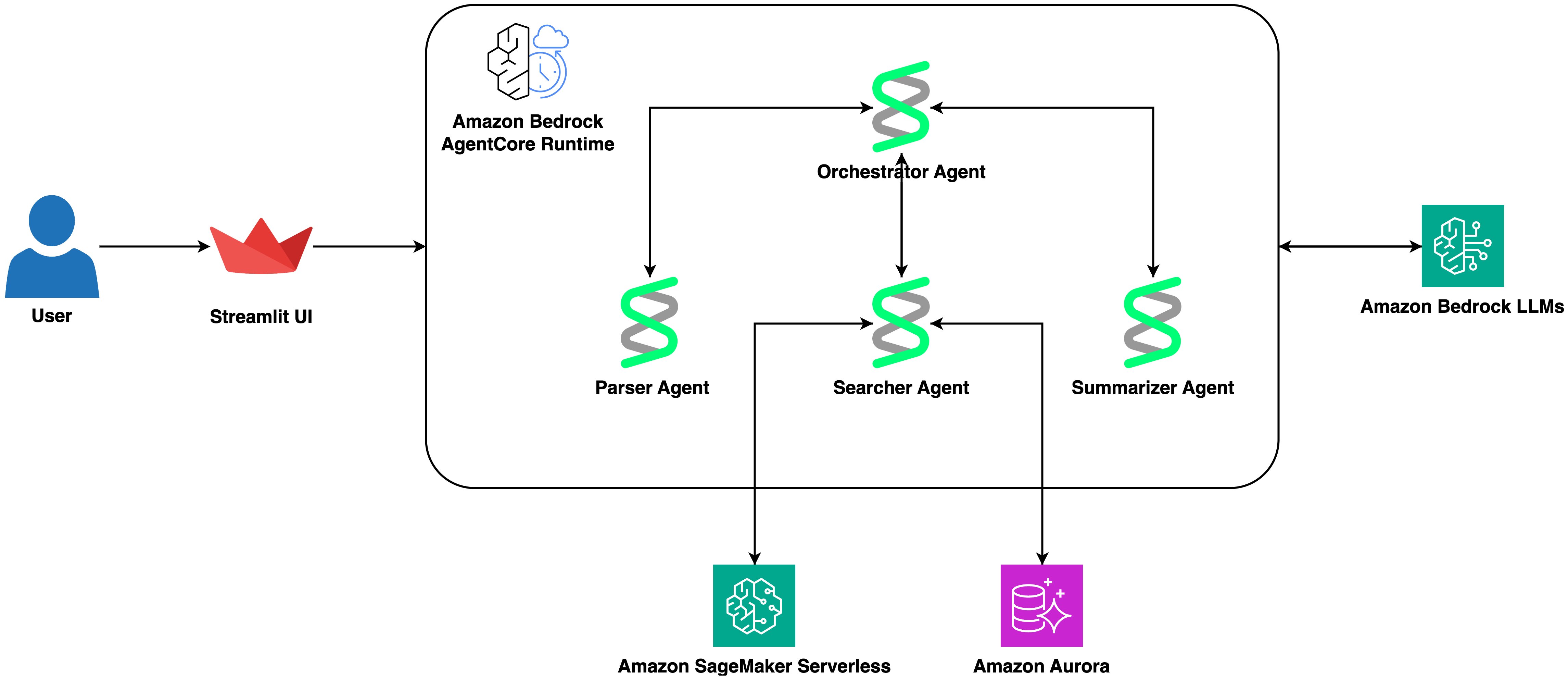
This post shows you how to build a conversational protein research assistant that combines three capabilities: Natural language query parsing to extract structured search parameters, vector similarity search over protein embeddings using a specialized language model and ai-generated scientific summaries of search results.
The rapid advancement in large language models and specialized AI agents makes sophisticated biological research assistance technically feasible and increasingly accessible.
This represents a significant step towards automating complex, multi-modal scientific research tasks, accelerating discovery in fields like synthetic biology and drug development.
Researchers can now leverage AI to not only summarize but also actively parse, search, and synthesize information from vast biological datasets, moving beyond simple keyword searches.
- · Biotechnology sector
- · Pharmaceutical companies
- · AI platform providers
- · Synthetic biology researchers
- · Traditional drug discovery methods
- · Manual data analysis services
Increased efficiency in protein research and drug discovery pipelines.
Faster development of novel proteins, enzymes, and therapeutic compounds, leading to new medical and industrial applications.
Ethical and safety considerations around AI-driven biological design may become more prominent as the technology matures.
This signal links to a primary source. Continuum Brief monitors and indexes it as part of the live intelligence stream — we do not republish source content.
Read at AWS Machine Learning Blog