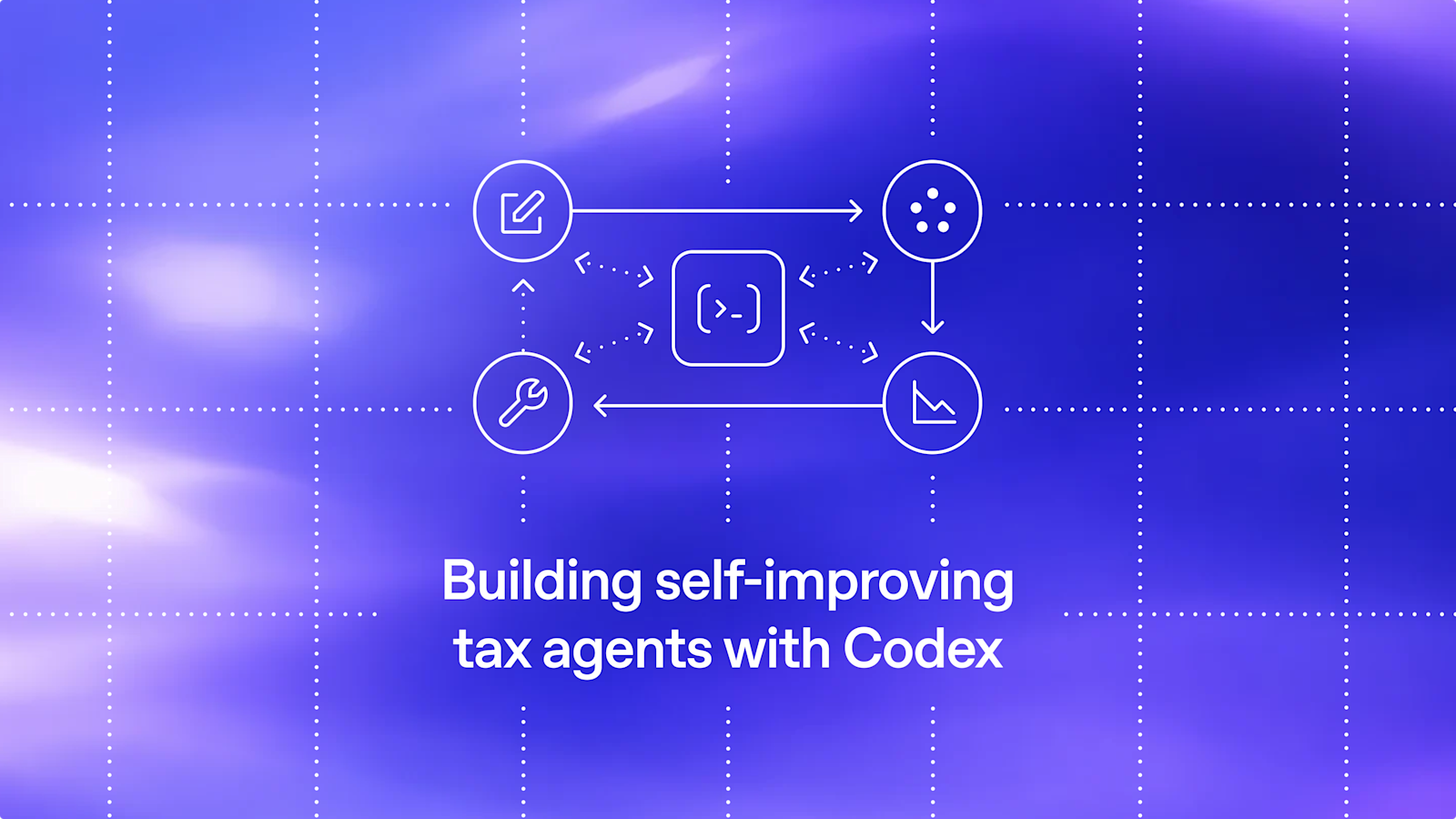
See how OpenAI, Thrive, and Crete built a self-improving tax agent with Codex, automating filings, improving accuracy, and accelerating workflows.
The continuous advancements in large language models like Codex are enabling increasingly sophisticated applications in professional services, accelerating the development of specialized AI agents.
This development highlights the growing capability of AI agents to automate complex, knowledge-based workflows, impacting white-collar employment and the efficiency of established industries.
The feasibility of deploying self-improving AI agents for tasks like tax filings is demonstrated, indicating a progression from assistive AI to autonomous task execution in highly regulated domains.
- · AI developers
- · Businesses adopting AI agents
- · Taxpayers seeking efficiency
- · Traditional tax preparation services
- · Entry-level accounting roles
- · Legacy enterprise software vendors
Companies will increasingly invest in AI agent development and integration for various operational tasks.
This adoption will lead to significant efficiency gains and cost reductions across sectors, but also significant displacement of human labor.
The legal and regulatory frameworks surrounding autonomous AI-driven financial services will need rapid evolution to address accountability and compliance.
This signal links to a primary source. Continuum Brief monitors and indexes it as part of the live intelligence stream — we do not republish source content.
Read at OpenAI Blog