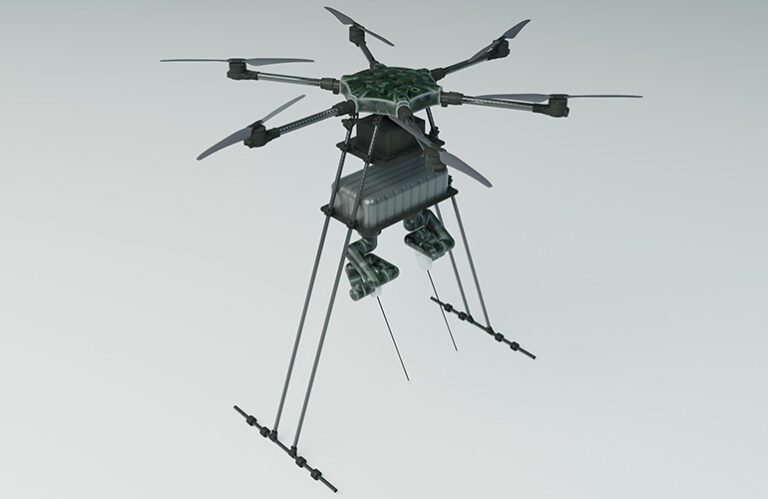
The robotics developer is focusing on providing emergency care in active war zones and beyond. The post Can surgical robots fly? SS Innovations discusses challenges, solutions appeared first on The Robot Report .
Advances in robotics and drone technology are converging, making the concept of airborne surgical platforms increasingly feasible, driven by a growing need for rapid medical intervention in austere environments.
This development represents a significant step towards autonomous and remote medical capabilities, potentially transforming emergency healthcare delivery in conflict zones and disaster areas, reducing casualties and improving outcomes.
The paradigm of surgical care delivery shifts from requiring fixed infrastructure to highly mobile, adaptable units, expanding access to advanced medical procedures in previously unreachable or dangerous locations.
- · Defense contractors
- · Robotics companies
- · Emergency medical services
- · Healthcare technology providers
- · Traditional field hospitals
- · Logistics-dependent medical operations
Rapid deployment of advanced surgical capabilities to frontline or remote locations becomes possible, improving survival rates.
Development of specialized aerial platforms for medical transport and intervention accelerates, integrating AI for navigation and operational efficiency.
The integration of these systems into military and disaster response strategies reduces the requirement for human personnel in dangerous roles, reshaping operational doctrine and ethics.
This signal links to a primary source. Continuum Brief monitors and indexes it as part of the live intelligence stream — we do not republish source content.
Read at The Robot Report