Cancer cells adopt unprecedented strategies to produce a molecule that protects them from iron-dependent death
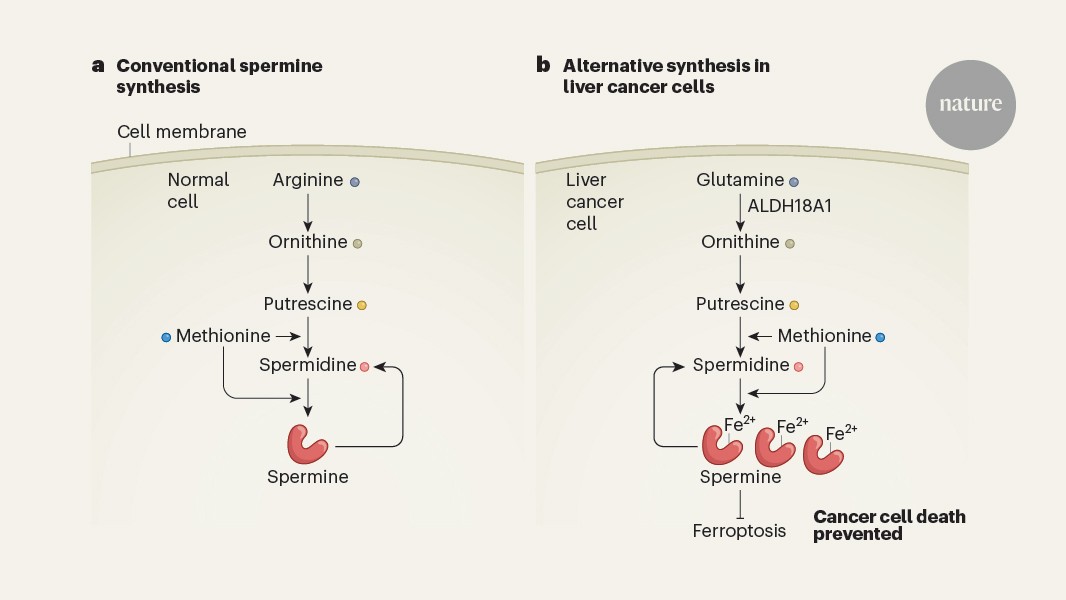
Nature, Published online: 22 June 2026; doi:10.1038/d41586-026-01802-3 The finding that spermine molecules in cells bind to iron to prevent it unleashing ferroptosis, a type of cell death, opens up strategies for treating tissue damage and cancer.
Scientific research continuously uncovers new biological mechanisms, and this discovery is a recent breakthrough in understanding cancer cell survival and novel therapeutic targets.
This finding fundamentally changes our understanding of cancer cell protection mechanisms and opens new avenues for developing targeted cancer and tissue damage therapies.
Previously unknown strategies cancer cells use to evade ferroptosis have been identified, enabling researchers to design drugs that specifically disrupt these protective pathways.
- · Biopharmaceutical companies
- · Oncology researchers
- · Patients with cancer
- · Synthetic biology companies
- · Cancer cells
New drug discovery efforts will focus on targeting spermine-iron binding to induce ferroptosis in cancer cells.
The development of a new class of cancer treatments that specifically trigger iron-dependent cell death in tumors.
Improved prognoses and treatment options for various cancers, potentially leading to a reduction in cancer mortality rates over decades.
This signal links to a primary source. Continuum Brief monitors and indexes it as part of the live intelligence stream — we do not republish source content.
Read at Nature — Latest Research