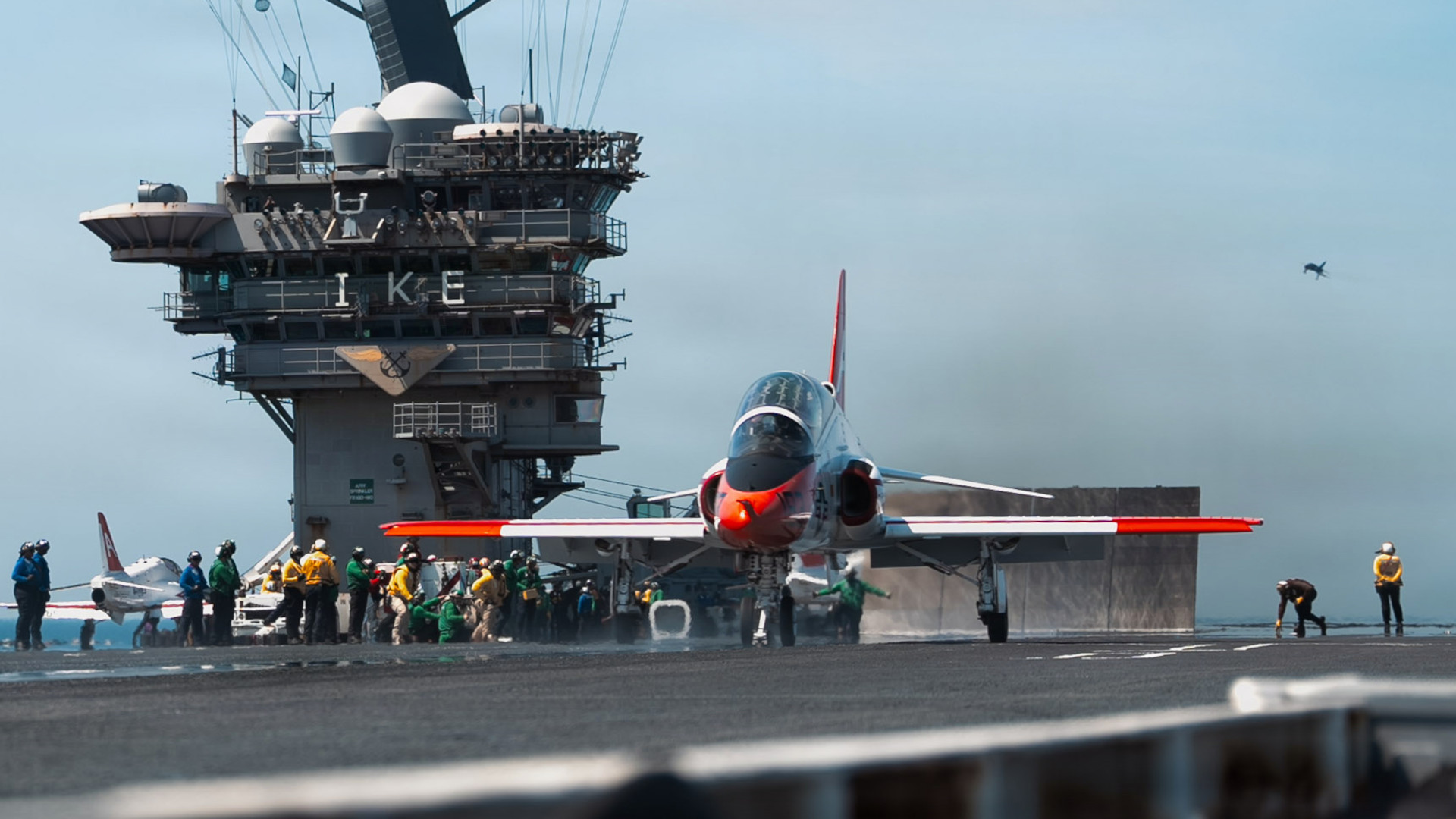
E-2 pilots and foreign student pilots still need to do carrier qualifications, but huge changes to the naval aviation training landscape are looming. The post Carrier Qualifications Still Happening For A Few Navy Fighter Pilots In Training appeared first on TWZ .
The U.S. Navy is actively re-evaluating and modernizing its pilot training programs to align with future operational needs and technological advancements, leading to changes in established qualification processes.
This shift indicates a broader restructuring within naval aviation, potentially leading to more specialized training paths, reliance on advanced simulation, and a reallocation of resources.
The scope and methods for carrier qualifications are changing, suggesting a move away from traditional, broad-based training for all fighter pilots towards more targeted or simulation-intensive approaches.
- · Naval aviation simulation companies
- · U.S. Navy budget allocators (from reduced operational costs)
- · Foreign student pilot programs (maintaining real-world qualification access)
- · Manufacturers of T-45 training aircraft (potential reduction in demand)
- · Training bases focused on traditional carrier qualifications
- · Pilots expecting traditional career path (if not adapted)
Reduced flight hours for specific pilot cohorts in carrier qualification training.
Increased investment in advanced flight simulators and virtual reality training environments for naval aviators.
A potential redefinition of what constitutes 'readiness' for naval aviation, emphasizing digital proficiency alongside traditional combat skills.
This signal links to a primary source. Continuum Brief monitors and indexes it as part of the live intelligence stream — we do not republish source content.
Read at The War Zone