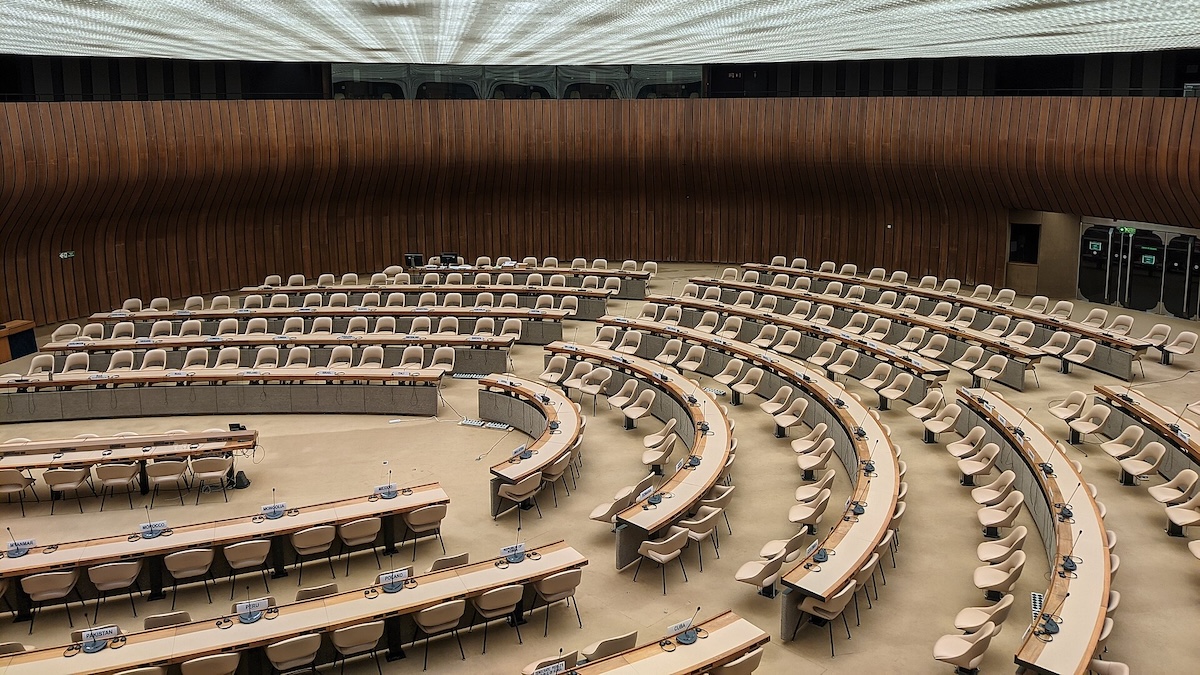
China’s diplomats are on an “AI governance” offensive. At a May 5 United Nations meeting, China’s vice minister of science and technology championed China’s role in shaping U.N.-led frameworks that determine how the technology should be built and used. Just a week earlier, two top Chinese AI experts actively involved in Beijing’s governance efforts appeared by video on a Capitol Hill panel discussion hosted by Senator Bernie Sanders, touting China’s contributions to AI safety and cooperation.Norms and standards on AI development and applications are still being defined. Being a standards-sette
China is actively leveraging its diplomatic presence and technical expertise to shape global AI governance frameworks while these norms are still undefined.
Controlling the narrative and standards for AI development and deployment is critical for long-term technological leadership and competitive advantage.
The global competition over AI is expanding beyond raw technical capabilities to include the battle for normative and regulatory influence.
- · China
- · UN bodies
- · AI ethicists and policy professionals
- · United States tech leadership
- · Western tech companies
- · Unilateral AI governance approaches
China's influence in international AI standard-setting bodies will increase significantly.
Future global AI regulations may reflect Chinese values and priorities more than Western ones, impacting technology design and deployment.
A bifurcated global AI ecosystem could emerge, with distinct regulatory regimes and corresponding technological stacks.
This signal links to a primary source. Continuum Brief monitors and indexes it as part of the live intelligence stream — we do not republish source content.
Read at War on the Rocks