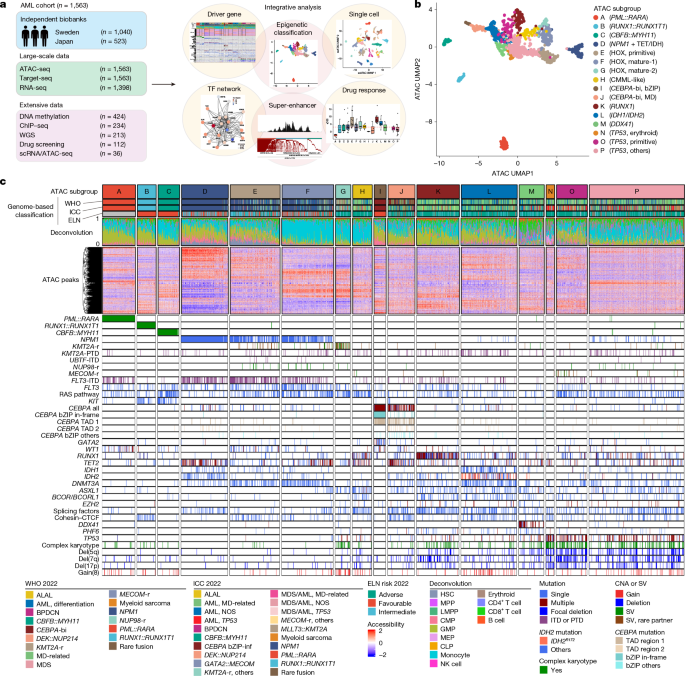
Nature, Published online: 08 July 2026; doi:10.1038/s41586-026-10703-4 An ATAC-seq-based approach is used to classify acute myeloid leukaemia (AML) into 16 epigenomic subgroups, and provides insight into the role of non-genetic mechanisms in determining pathogenesis, clinical behaviour and drug sensitivity in this disease.
This research provides a more detailed and actionable understanding of AML heterogeneity, leveraging advanced 'omics' technologies that are increasingly accessible and refined.
A sophisticated reader should care because this classification allows for a more precise, epigenomic-driven approach to AML treatment, potentially improving efficacy and reducing side effects.
The ability to classify AML into 16 epigenomic subgroups shifts the understanding of the disease from a largely genetic perspective to one that includes significant non-genetic mechanisms driving pathogenesis, clinical behavior, and drug sensitivity.
- · Biotech and pharmaceutical companies developing targeted AML therapies
- · Oncology researchers and clinicians
- · Patients with acute myeloid leukaemia
- · Genomic sequencing and analysis companies
- · Companies manufacturing broad-spectrum chemotherapy for AML
- · Diagnostic methods relying solely on genetic markers
Improved diagnosis and treatment stratification for AML patients.
Accelerated development of novel, epigenetically-targeted drugs for various cancers beyond AML.
A broader paradigm shift in medicine towards epigenomic profiling for personalized treatment across a wider range of complex diseases.
This signal links to a primary source. Continuum Brief monitors and indexes it as part of the live intelligence stream — we do not republish source content.
Read at Nature — Latest Research