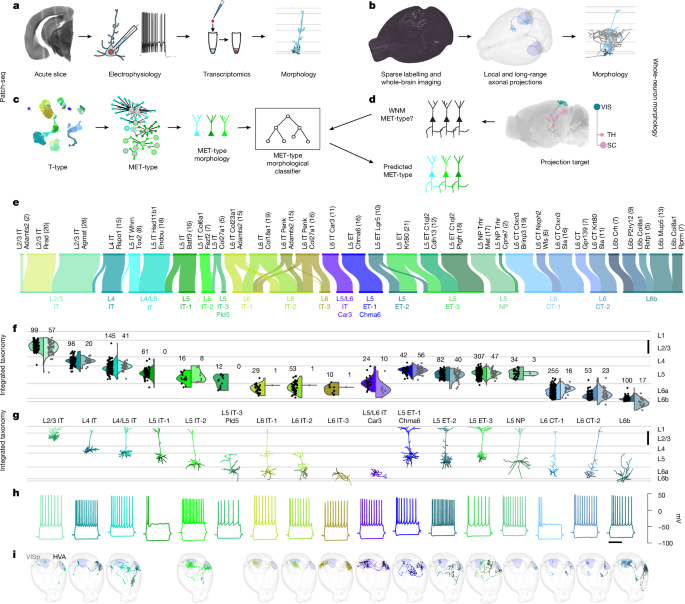
Nature, Published online: 01 July 2026; doi:10.1038/s41586-026-10424-8 In the mouse visual cortex, multimodal cell-type definitions, gene expression patterns and cell location predict long-range projection targets of excitatory neurons, linking transcriptomic identity with morphological, electrophysiological and circuit-level properties.
This research represents a significant advancement in neuroscience, driven by improving genomic sequencing technologies and computational power capable of analyzing complex biological datasets.
Understanding the precise links between gene expression and neuronal function in the brain could unlock new pathways for treating neurological disorders and advancing biologically inspired AI.
The ability to predict neuronal projection targets from transcriptomic identity changes how we approach brain mapping and could lead to more targeted interventions in neurological research.
- · Neuroscience research institutions
- · Pharmaceutical R&D
- · Biotechnology firms
- · AI development (biologically inspired)
- · Traditional empirical neuroscience without omics integration
This research provides a more granular understanding of brain cell types and their function, aiding in basic neuroscience discovery.
Improved understanding of neural circuits could lead to novel drug targets and therapies for neurodegenerative or psychiatric conditions.
The principles derived from linking genetic identity to functional connectivity might inform the development of more sophisticated, brain-like artificial intelligence architectures.
This signal links to a primary source. Continuum Brief monitors and indexes it as part of the live intelligence stream — we do not republish source content.
Read at Nature — Latest Research