ConsentFix and ClickFix: How Microsoft 365 Accounts are Hijacked in 3 Seconds
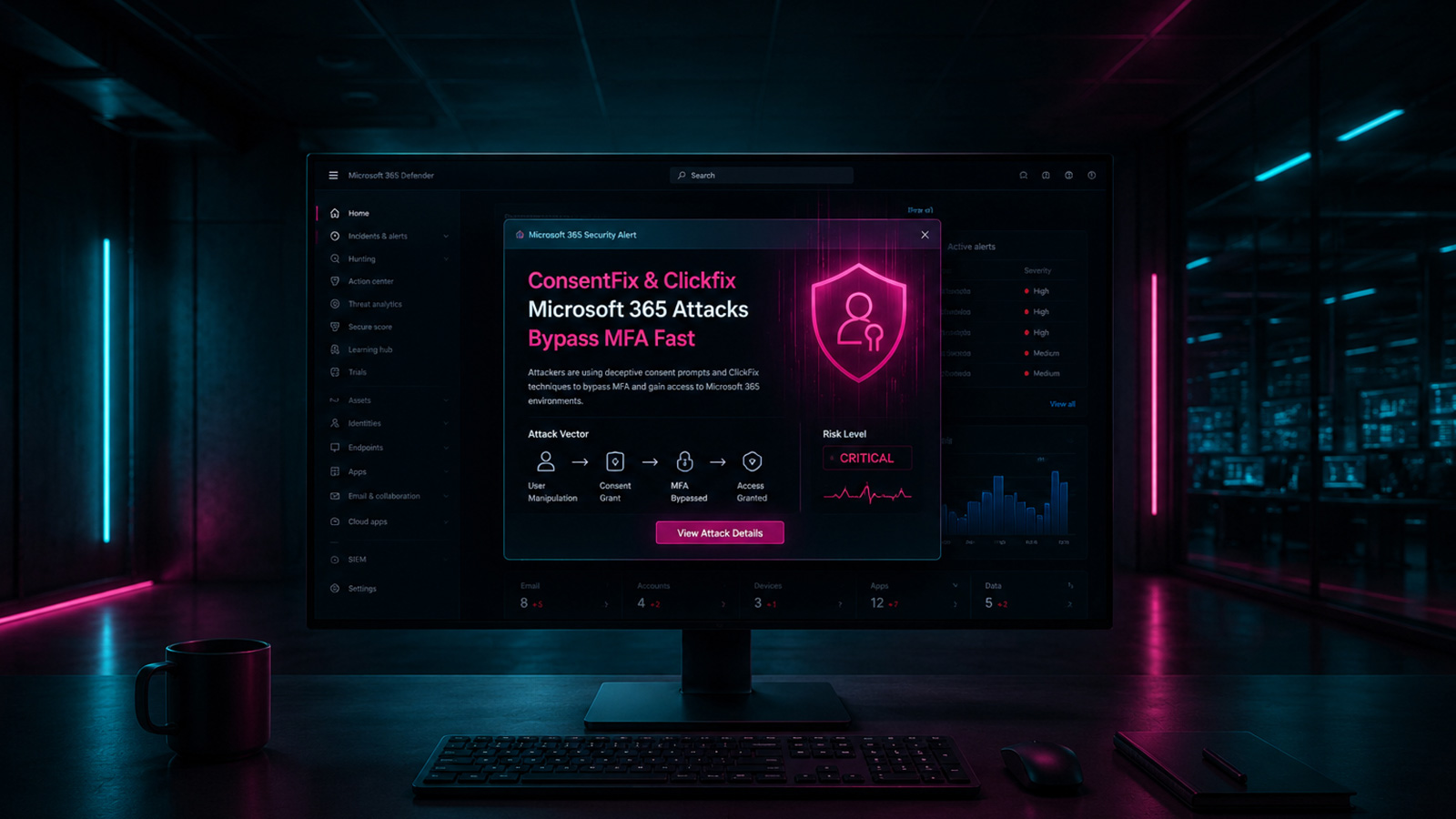
ConsentFix and ClickFix attacks steal Microsoft 365 tokens in seconds using fake prompts and OAuth flows. Learn how these MFA bypass tactics work and how to defend against them. [...]
The increasing reliance on cloud services and multi-factor authentication, coupled with sophisticated phishing techniques, makes token hijacking a growing threat that security researchers are now actively dissecting.
This highlights the persistent vulnerability of even MFA-protected cloud accounts to sophisticated social engineering and token theft, demanding more robust architectural and user-education defenses.
Traditional MFA is shown to be insufficient against advanced token hijacking, necessitating a re-evaluation of identity verification and session management in cloud environments.
- · Security software vendors (advanced identity solutions)
- · Cybersecurity consultants
- · Organizations with strong security awareness training
- · Organizations relying solely on traditional MFA
- · Microsoft 365 users
- · Cloud service providers (reputational risk)
Increased credential and session token theft from Microsoft 365 accounts will lead to broader corporate breaches.
Organizations will invest more heavily in advanced identity protection, behavioral analytics, and phishing-resistant authentication methods.
The development of truly token-less or cryptographically bound session management could accelerate, shifting the paradigm of cloud security.
This signal links to a primary source. Continuum Brief monitors and indexes it as part of the live intelligence stream — we do not republish source content.
Read at BleepingComputer