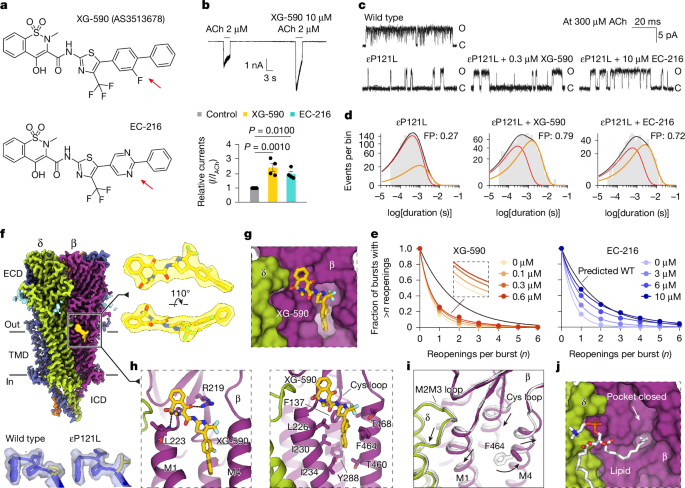
Nature, Published online: 01 July 2026; doi:10.1038/s41586-026-10706-1 Cryogenic electron microscopy, chemical biology and electrophysiology are used to determine the structures and functional consequences of representative congenital myasthenic syndrome-associated mutant receptors with and without drugs, uncovering principles of pathogenesis and providing a framework for precision therapies.
The convergence of advanced imaging techniques like cryogenic electron microscopy with targeted chemical biology is enabling unprecedented precision in understanding and correcting genetic defects.
This research provides a framework for developing precision therapies for diseases with genetic origins, potentially transforming treatment paradigms for a range of congenital conditions.
The ability to precisely map and correct protein defects at an atomic level moves the medical field closer to highly personalized and effective treatments for genetic diseases.
- · Patients with congenital myasthenic syndrome
- · Biopharmaceutical companies
- · Synthetic biology researchers
- · Cryo-EM technology providers
- · Traditional broad-spectrum therapeutic approaches
- · Healthcare systems unprepared for precision medicine
- · Patients whose conditions are not yet amenable to such analysis
Identification of precise molecular targets for drug development against congenital myasthenia.
Accelerated development of similar precision therapies for other genetic disorders leveraging these methodologies.
Shift in drug discovery paradigms towards structural biology-driven design and highly personalized medicine approaches.
This signal links to a primary source. Continuum Brief monitors and indexes it as part of the live intelligence stream — we do not republish source content.
Read at Nature — Latest Research