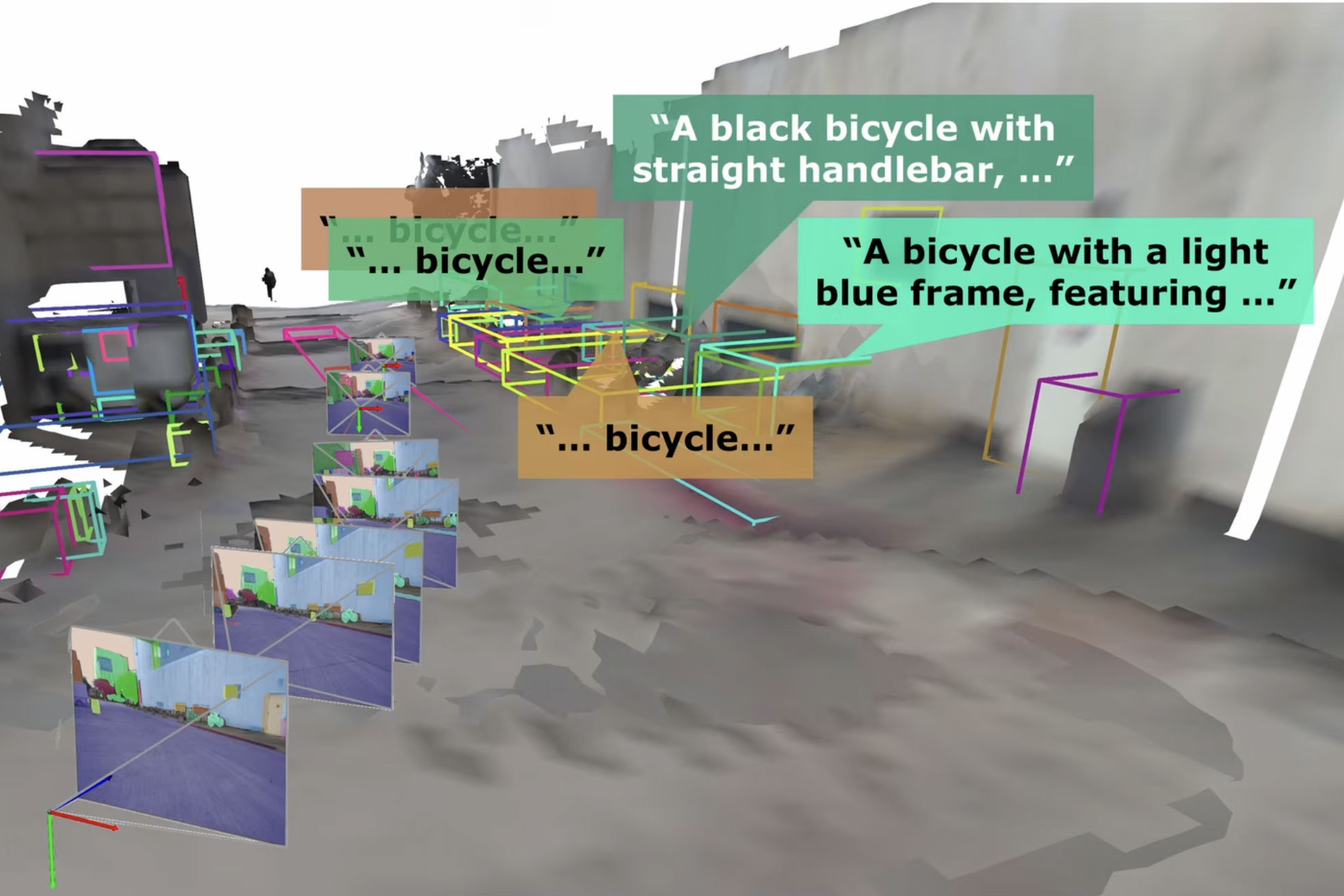
A new spatial memory system for robots efficiently captures details about the objects they see while exploring their environment.
Advances in AI, particularly in computer vision and machine learning, are enabling more sophisticated spatial understanding and memory systems for autonomous agents.
Improved spatial memory in robots could significantly enhance their autonomy, efficiency, and ability to operate in complex, dynamic environments, extending their utility beyond controlled settings.
Robots equipped with these systems can build and retain more detailed and usable mental maps of their surroundings, leading to more adaptable and context-aware robotic behaviors.
- · Robotics companies
- · Logistics and warehousing sectors
- · Autonomous vehicle developers
- · Elderly care services
- · Industries reliant on high-cost, inflexible automation
- · Manual labor in highly structured environments
Robots will become significantly more capable of navigating and interacting within unstructured, human-centric environments.
This capability could accelerate the deployment of autonomous systems into new sectors, changing labor requirements and operational models.
The widespread adoption of highly intelligent robots could lead to new ethical and societal challenges regarding human-robot interaction and accountability.
This signal links to a primary source. Continuum Brief monitors and indexes it as part of the live intelligence stream — we do not republish source content.
Read at MIT News — AI