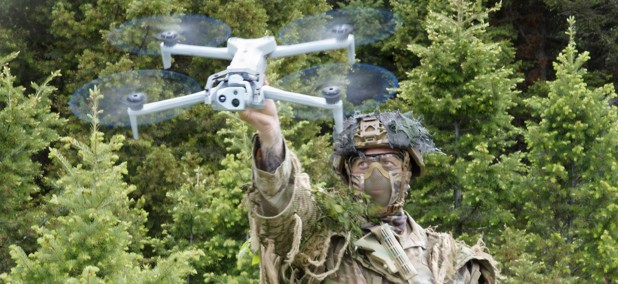
A mobile brigade in the 101st Airborne Division put drones to the test in a recent training rotation—and used the Infantry Squad Vehicle to keep unmanned systems running.
The US Army is actively integrating unmanned systems into ground operations, requiring robust mobile power solutions to sustain their operations in the field.
This demonstrates a practical application of existing military assets to support emerging drone warfare capabilities, highlighting the evolving nature of battlefield logistics and power requirements.
Traditional ground vehicles are now being adapted to serve as mobile power hubs for advanced unmanned systems, extending the operational reach and endurance of drone fleets.
- · Defense contractors specializing in tactical vehicles
- · Military logistics and engineering units
- · Drone manufacturers
- · Battlefield energy solution providers
- · Logistics chains reliant on static power sources
- · Legacy unpowered drone systems
- · Units unable to adapt to mobile power demands
Increased operational uptime and range for battlefield drones.
Development of more integrated vehicle-to-drone power and data transfer systems.
Conversion of more tactical vehicles into multi-purpose mobile command and power hubs, reducing the need for dedicated support vehicles.
This signal links to a primary source. Continuum Brief monitors and indexes it as part of the live intelligence stream — we do not republish source content.
Read at Defense One