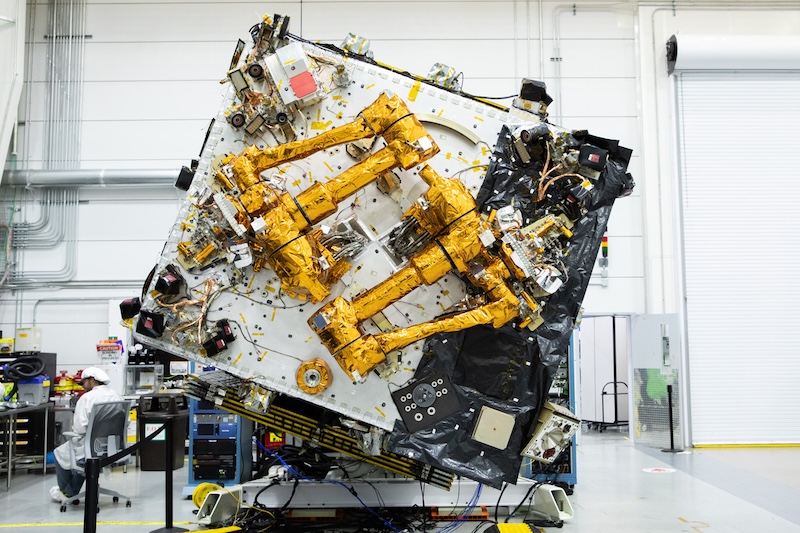
Defense Advanced Research Projects Agency (DARPA) and its industry partners are preparing for the launch of a robotic satellite servicing mission designed to demonstrate on-orbit maintenance and upgrade capabilities for spacecraft operating in geosynchronous orbit. The mission, known as Robotic Servicing of Geosynchronous Satellites (RSGS), is scheduled for launch in summer 2026 and represents one […]
The increasing density of orbital assets and the strategic competition in space necessitate advanced capabilities for on-orbit maintenance and extending satellite lifespans.
This mission demonstrates a significant step towards a more resilient and sustainable space infrastructure, enabling servicing, upgrades, and potentially defensive maneuvers for critical satellites.
The ability to robotically service satellites in geosynchronous orbit fundamentally alters the economics and strategic utility of space assets, moving beyond single-launch, finite-lifespan paradigms.
- · Aerospace robotics companies
- · Satellite operators
- · Space defense contractors
- · Governments with significant space assets
- · Companies reliant solely on ground-based satellite control
- · Nations without advanced space robotics capabilities
Successful deployment will validate on-orbit robotic servicing technologies for future commercial and military applications.
It will drive further investment into space logistics, debris removal, and in-orbit manufacturing capabilities.
This could lead to a 'refuel and repair' economy in space, increasing the utility and lifespan of orbital assets and potentially lowering launch costs for new missions.
This signal links to a primary source. Continuum Brief monitors and indexes it as part of the live intelligence stream — we do not republish source content.
Read at Robotics & Automation News