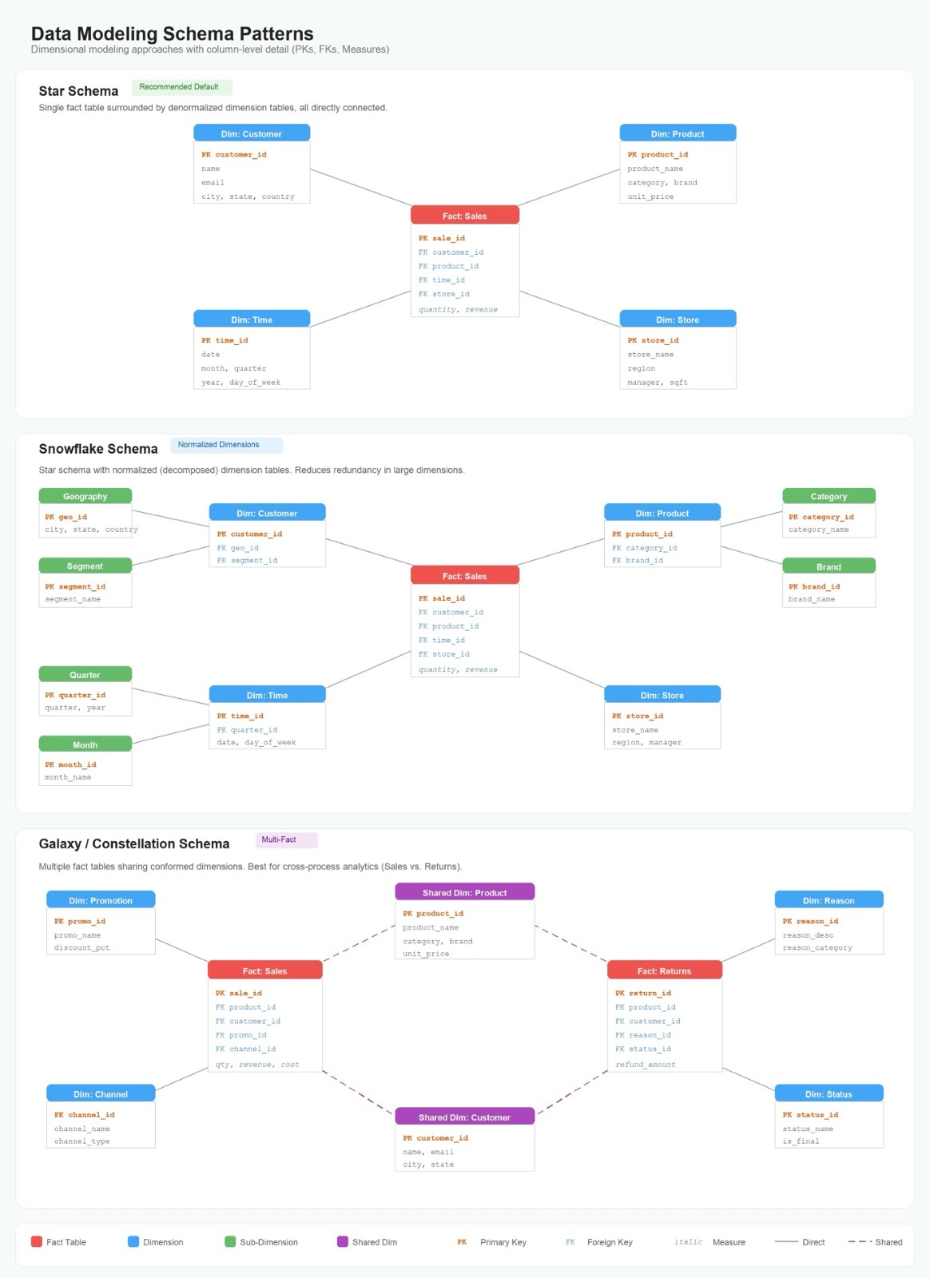
Today, we are excited to announce Multi-Dataset Relationships in Amazon Quick Sight. This new capability lets you define logical relationships between Quick Sight datasets and perform runtime joins at query time. Instead of flattening tables ahead of time, you keep each table as its own Quick Sight dataset and declare how those datasets relate to one another inside a Quick Sight Topic.
The continuous evolution of cloud data platforms demands more flexible and efficient data management solutions to handle increasing complexity and scale.
This enhancement improves the usability and performance of Amazon QuickSight, enabling businesses to derive insights more rapidly and with greater agility from complex datasets.
Users can now establish logical relationships between separate datasets within QuickSight, eliminating the need for pre-flattening and simplifying data modeling.
- · AWS
- · Amazon QuickSight users
- · Data analysts
- · Businesses leveraging cloud BI
- · Traditional ETL tools
- · Data warehousing solutions requiring extensive pre-processing
Easier and faster data preparation for business intelligence and analytics.
Increased adoption of Amazon QuickSight for complex analytical workloads due to improved flexibility.
Potential for new analytical applications and insights previously hindered by data modeling constraints.
This signal links to a primary source. Continuum Brief monitors and indexes it as part of the live intelligence stream — we do not republish source content.
Read at AWS Machine Learning Blog