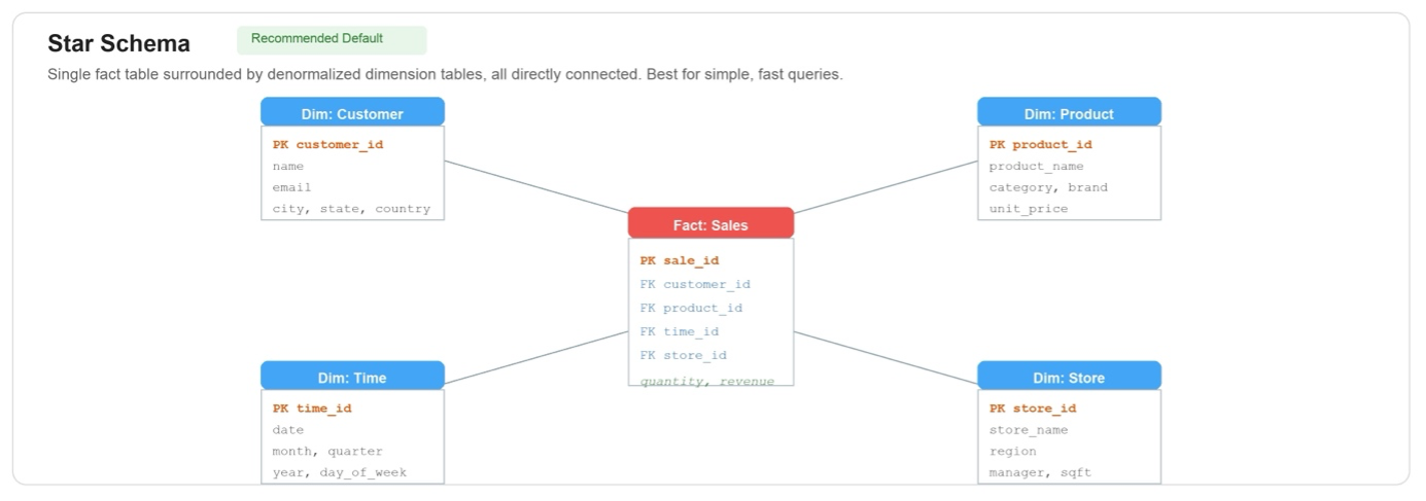
In this post, we shift from concepts to patterns. For each schema, you’ll find a table structure, use cases, implementation steps, and sample SQL queries. We also cover workarounds for advanced scenarios that require extra modeling steps, and close with a summary of current limitations.
The continuous evolution of cloud data analytics platforms like AWS requires ongoing guidance and best practices for optimal usage, addressing the increasing complexity of data relationships.
Sophisticated users of AWS QuickSight can leverage advanced data modeling techniques to improve the efficiency and accuracy of their business intelligence and analytics initiatives.
This provides detailed patterns and workarounds, moving beyond basic conceptual understanding to practical, implementable solutions for multi-dataset relationships within QuickSight.
- · AWS QuickSight users
- · Data analysts
- · Business intelligence teams
- · Organizations with inefficient data models
Improved performance and reliability of dashboards and reports built on Amazon QuickSight.
Enhanced decision-making capabilities within organizations due to more robust and accurate data insights.
Increased adoption and dependency on AWS QuickSight for complex enterprise-level analytics scenarios.
This signal links to a primary source. Continuum Brief monitors and indexes it as part of the live intelligence stream — we do not republish source content.
Read at AWS Machine Learning Blog