Designing a Multi-Agent System for Engineering Support at Scale: A Case Study From Grab
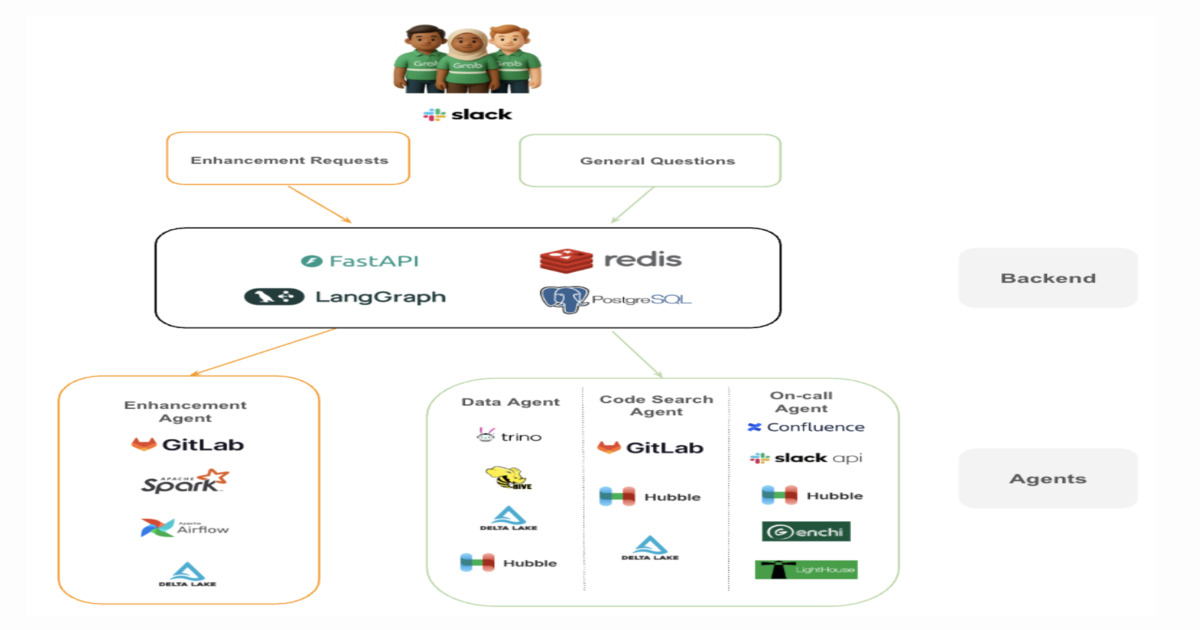
Grab’s Central Data Team built a multi-agent AI system to automate repetitive engineering support tasks across its data warehouse platform. The system separates investigation and enhancement workflows using specialized agents coordinated via an orchestration layer. It reduces operational load, improves resolution speed, and shifts engineering effort from firefighting to platform engineering work. By Leela Kumili
The increasing complexity of data infrastructure and the maturity of AI agentic systems are converging, making automated engineering support both feasible and necessary for large technology companies.
This case study demonstrates a practical application of AI agents to significantly reduce operational overhead and improve the efficiency of engineering teams in data-intensive organizations.
Engineering teams can now offload repetitive support tasks to autonomous AI systems, allowing human engineers to focus on more strategic platform development and innovation.
- · Companies adopting multi-agent systems
- · AI agent platform providers
- · Platform engineers
- · Companies reliant on manual engineering support
- · Cost centers for routine IT/data support
- · Legacy ITSM providers
Increased efficiency and reduced operational costs for data warehouse management.
Engineers shift from reactive issue resolution to proactive system design and feature development.
Broader adoption of similar multi-agent systems across various enterprise functions, leading to significant white-collar automation.
This signal links to a primary source. Continuum Brief monitors and indexes it as part of the live intelligence stream — we do not republish source content.
Read at InfoQ