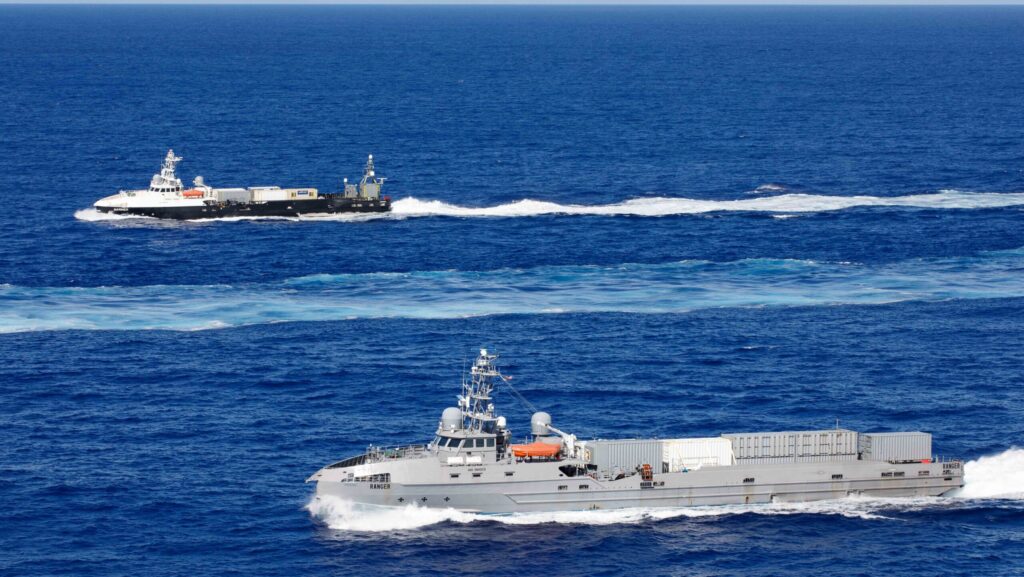
Chief of Naval Operations Adm. Daryl Caudle has been on a “containerized capability campaign.”
The US Navy is actively seeking innovative ways to rapidly integrate new technologies and maintain a competitive edge, recognizing the need for faster acquisition cycles in defense tech.
This initiative signals a significant shift towards modular, adaptable warfare capabilities, moving away from traditional, monolithic system development and enabling quicker deployment of advanced naval tech.
Naval forces will be able to more flexibly deploy diverse capabilities via standardized containerized payloads, accelerating technology insertion and operational adaptability.
- · Defense contractors specializing in modular systems
- · Defense Innovation Unit (DIU)
- · US Navy
- · Companies in maritime autonomy and cybersecurity
- · Traditional, slow-moving defense acquisition programs
- · Navies reliant on custom, integrated systems
- · Adversaries unprepared for rapid capability updates
The competition will lead to the development and fielding of new containerized capabilities for naval platforms, particularly Unmanned Surface Vessels (MUSV).
This modular approach could foster a more agile defense industrial base, enabling smaller firms and innovative startups to contribute to naval defense more readily.
The widespread adoption of containerized payloads may lead to new doctrines for naval operations, emphasizing reconfigurability and distributed lethality.
This signal links to a primary source. Continuum Brief monitors and indexes it as part of the live intelligence stream — we do not republish source content.
Read at Breaking Defense