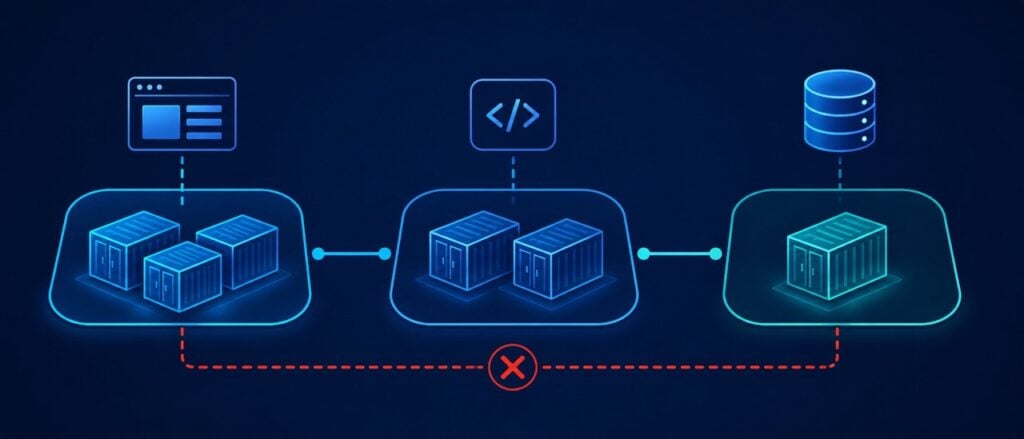
Docker makes networking feel simple. You run a container, expose a port, add a –network flag and things connect. In development, that is enough. In production, it is where teams quietly accumulate risk. What works in a laptop demo can quietly become a liability when the same defaults reach production. The post Docker Networking in Production: What Most Teams Get Wrong appeared first on Cloud Native Now .
The increasing complexity and adoption of cloud-native architectures necessitate a deeper understanding of production-grade networking best practices.
Incorrect Docker networking configurations can lead to significant security vulnerabilities and operational inefficiencies in production environments.
This highlights the need for development teams to move beyond default configurations and adopt more robust networking strategies for containerized applications in production.
- · Cloud-native security firms
- · DevOps consultancies
- · Organizations with strong DevSecOps practices
- · Organizations relying on default container networking configurations
- · Teams with limited DevSecOps expertise
- · Applications with weak network isolation
Increased focus on robust container networking solutions and security tools.
Greater demand for skilled DevSecOps engineers capable of implementing secure cloud-native infrastructures.
Potential for new industry standards or best practices to emerge for production container networking.
This signal links to a primary source. Continuum Brief monitors and indexes it as part of the live intelligence stream — we do not republish source content.
Read at Container Journal