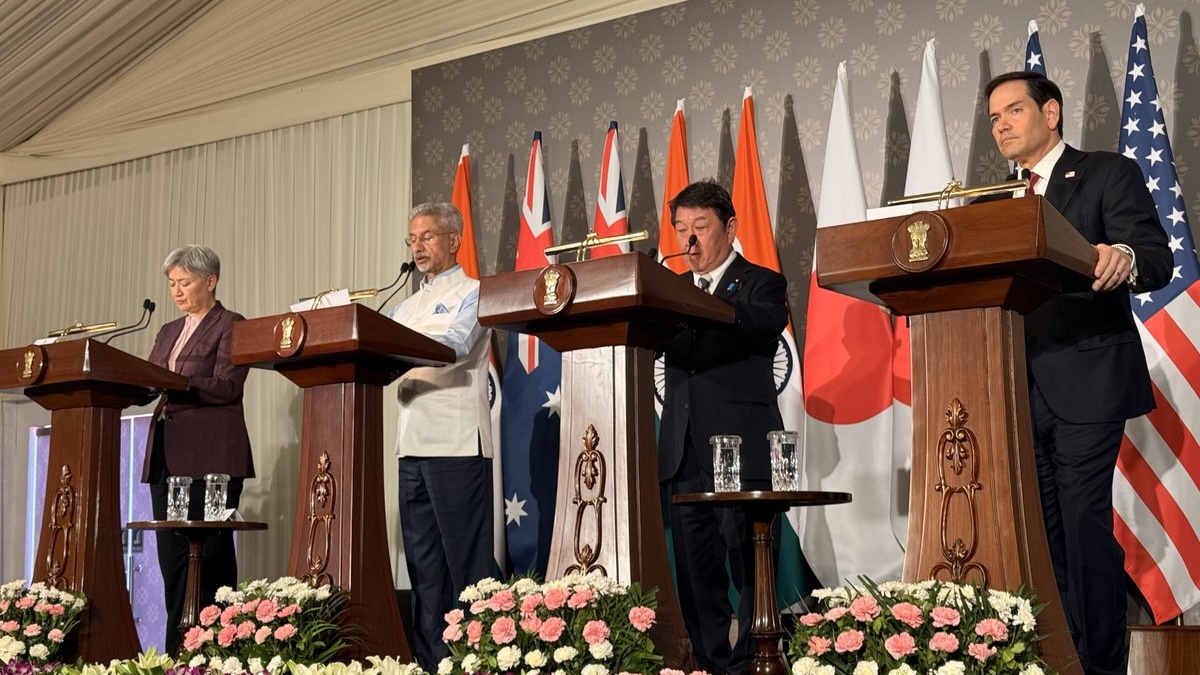
On May 26, India hosted a formal meeting of the foreign ministers of the Quad — comprising the United States, Australia, India, and Japan. Since its initial creation in 2007 and revival in 2017, foreign policy analysts have debated the usefulness of the organization, which was designed as a group of democratic states that could work together to counter growing Chinese power and influence. Under the second Trump administration, some analysts have expressed growing pessimism about the group’s effectiveness, given the president’s apparent lack of interest in attending a meeting with heads of stat
The formal meeting of Quad foreign ministers and ongoing debate about its effectiveness, particularly under a new administration, highlights current geopolitical tensions and alliance dynamics.
The Quad's continued existence and effectiveness directly influences the geopolitical balance in the Indo-Pacific and efforts to counter Chinese influence, impacting international trade routes, security, and strategic alliances.
The perceived strength or weakness of the Quad shifts the calculus for regional players regarding alliances and strategic positioning against China, potentially altering investment flows and defense postures.
- · Quad member states (if effective)
- · Regional allies balancing against China
- · China (if Quad strengthens)
- · Multilateral organizations without clear strategic focus
The Quad's perceived internal discord or strength directly impacts its ability to present a united front against Chinese expansion.
A weakened Quad might embolden China to pursue more aggressive regional policies, pressuring smaller Indo-Pacific nations.
Enhanced Quad cohesion could lead to integrated defense and economic strategies, potentially shaping new global trade and security architectures.
This signal links to a primary source. Continuum Brief monitors and indexes it as part of the live intelligence stream — we do not republish source content.
Read at War on the Rocks