Dramatically redesigned GMKtec EVO-X3 shown bearing Lisa Su’s signature of approval — flagship AI mini PC workstation is built around AMD’s Ryzen AI Max+ 395 'Strix Halo' processor, again
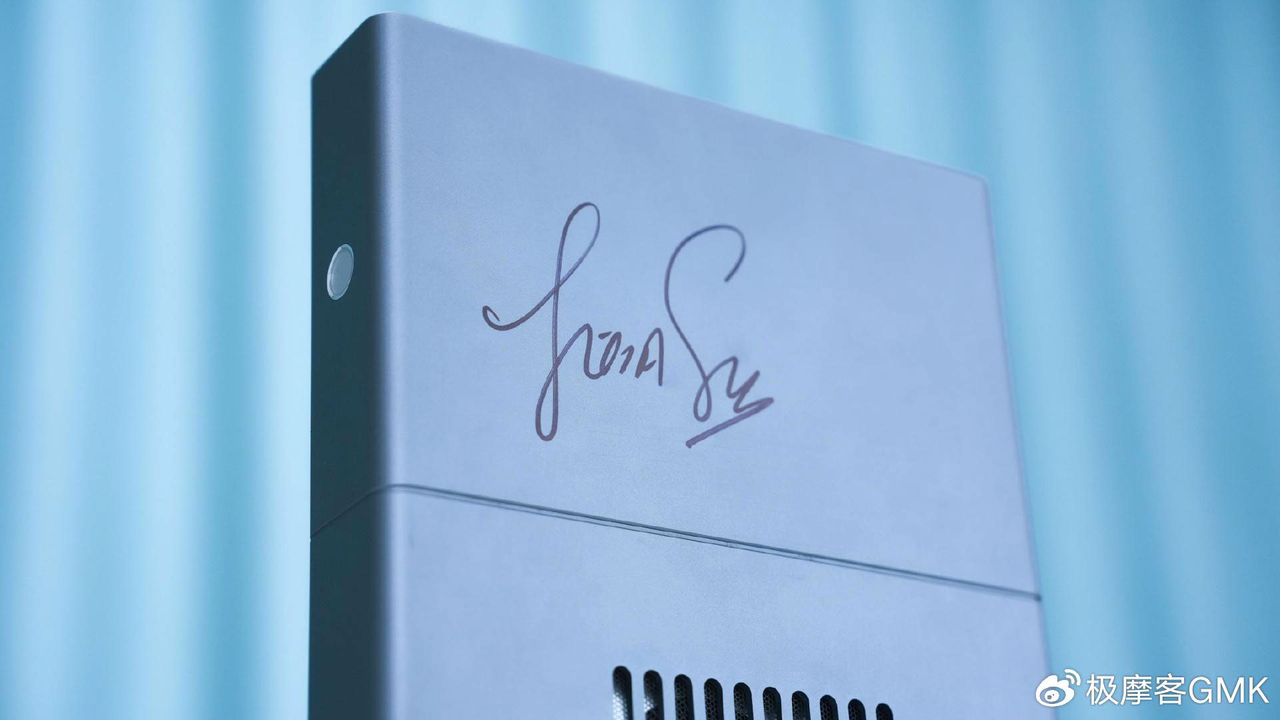
GMKtec's dramatically redesigned EVO-X3 'Strix Halo' Mini PC gets Lisa Su’s signature of approval.
The announcement aligns with the ongoing push for localized AI processing capabilities, reducing reliance on cloud infrastructure and democratizing access to high-performance AI. This comes as component suppliers like AMD are rolling out new powerful processors geared towards on-device AI.
The introduction of powerful AI-capable mini PCs like the EVO-X3 signifies a crucial step towards widespread edge AI adoption, enabling more efficient and private AI applications across various industries. This provides desktop-level AI performance in a compact form factor, democratizing access to sophisticated AI infrastructure.
Local AI compute capabilities are becoming significantly more accessible and powerful for individual users and small businesses, potentially shifting workloads from centralized clouds to the edge. This boosts the proliferation of AI inferencing outside large data centers and specialized servers.
- · AMD
- · GMKtec
- · Edge AI software developers
- · Graphic designers and AI creators
- · Nvidia (in mini PC segment)
- · Cloud AI service providers (for some workloads)
- · Traditional desktop PC manufacturers
Increased market competition in the mini PC and workstation segments, driven by AI hardware integration.
Accelerated development and adoption of AI applications optimized for local processing, fostering a new ecosystem of edge AI solutions.
Reduced latency and enhanced data privacy for AI-driven tasks, possibly leading to new regulatory frameworks for on-device AI ethics and security.
This signal links to a primary source. Continuum Brief monitors and indexes it as part of the live intelligence stream — we do not republish source content.
Read at Tom's Hardware