Dusting a Dirt Road: How The United States Can Break the Cycle of Failing Military Infrastructure
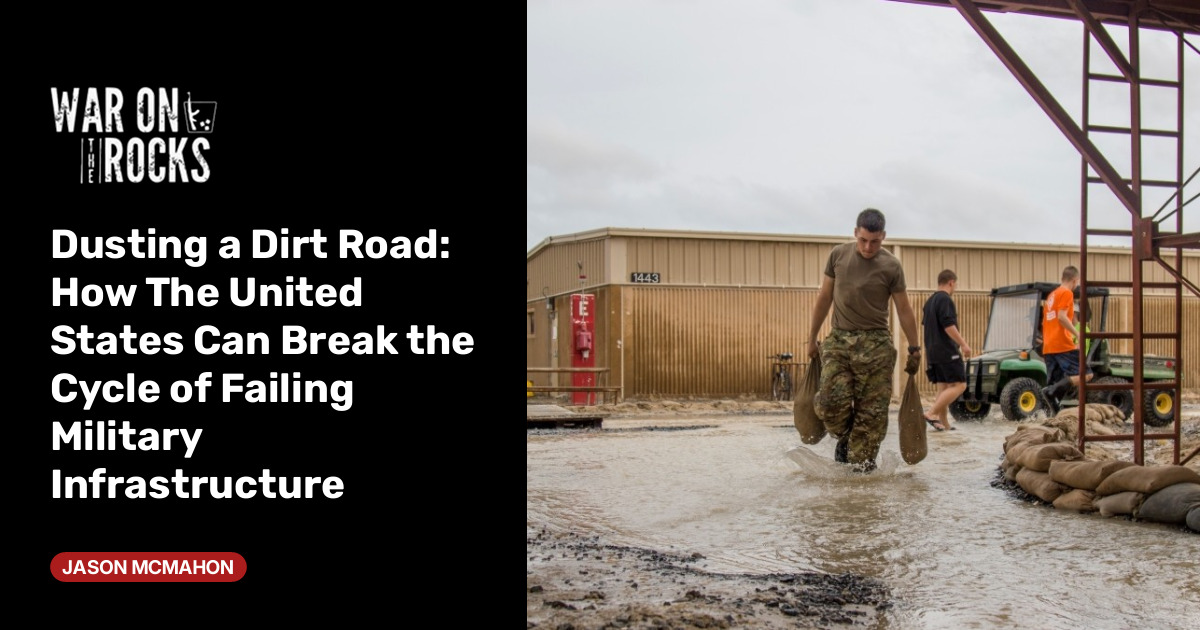
Winter Storm Uri ripped through Texas in January 2021. The frigid temperatures froze pipes, which then burst and caused flooding in aging barracks at Fort Hood, many of which were overdue for renovations and had vulnerable mechanical and utility systems. The burst pipes, damaged sprinkler systems, and frozen heating, ventilation, and air conditioning coils affected over 30 barracks, forcing soldiers to relocate and causing nearly $50 million in damage.According to the Department of Defense’s reporting, the United States owns and operates more than 700,000 facilities across nearly 5,000 sites a
The incident at Fort Hood in 2021 highlights the immediate and tangible impact of neglected military infrastructure, forcing a re-evaluation of current maintenance and investment strategies.
The deteriorating state of military infrastructure directly impacts readiness, operational capacity, and personnel well-being, posing a significant risk to national security and defence posture.
There is a growing recognition that neglecting existing infrastructure is as critical as developing new defense technologies, shifting focus towards recapitalization and modernization efforts.
- · Construction sector
- · Military infrastructure contractors
- · Defence industrial base
- · US military personnel
- · Military readiness (short-term)
- · Taxpayers (due to costly emergency repairs)
- · Outdated budget prioritization models
Significant investment will be allocated towards repairing and modernizing existing military facilities across the United States.
This investment could stimulate innovation in sustainable and resilient construction methods and materials for defence applications.
Improved infrastructure could enhance military recruitment and retention by providing better living and working conditions for service members.
This signal links to a primary source. Continuum Brief monitors and indexes it as part of the live intelligence stream — we do not republish source content.
Read at War on the Rocks