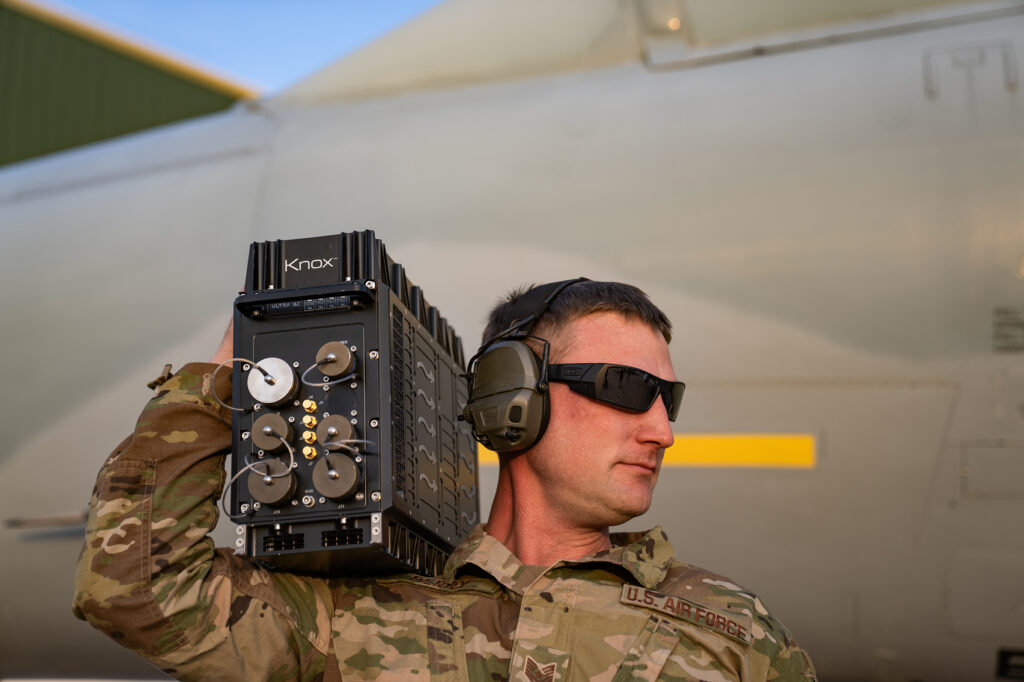
[Sponsored] The payoff is quicker tech insertion, avoiding vendor lock, and more room for autonomy, sensors, weapons, and mission growth.
The accelerating pace of technological development and the need for adaptable military systems are forcing a re-evaluation of current hardware and software architectures.
This highlights the critical need for modularity and open architectures in defense systems to rapidly integrate new technologies, avoid vendor lock-in, and maintain a competitive edge.
A shift toward more flexible, evolvable computing platforms at the edge will become a key design principle, prioritizing adaptability over static, bespoke solutions.
- · Modular hardware developers
- · Open-source software companies
- · Defense contractors embracing open architectures
- · Cybersecurity solution providers
- · Vendors with proprietary, closed systems
- · Traditional hardware-centric defense integrators
- · Legacy systems unable to adapt
Increased investment in modular edge computing and data interoperability for defense applications.
A more agile defense industrial base capable of rapid innovation and technology adoption.
Enhanced battlefield dominance through superior integration of AI, sensors, and autonomous systems at the tactical edge.
This signal links to a primary source. Continuum Brief monitors and indexes it as part of the live intelligence stream — we do not republish source content.
Read at Breaking Defense