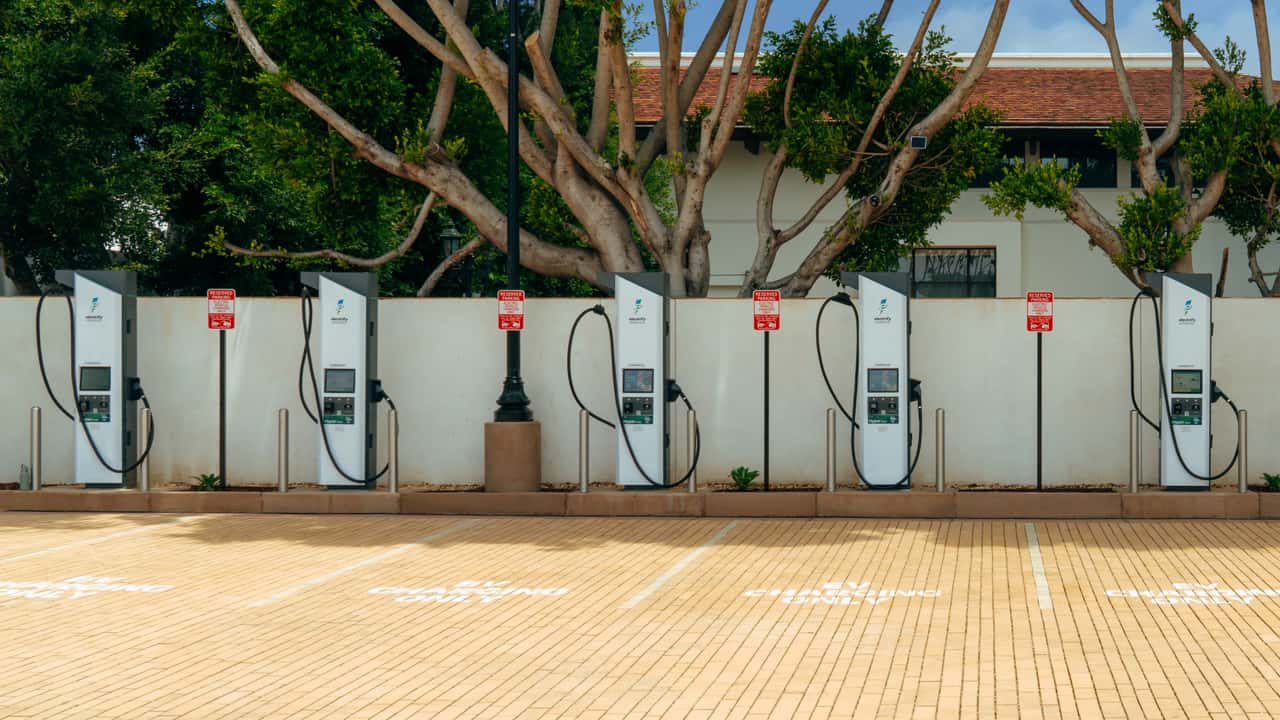
A huge battery energy storage system backs the American company’s newest large-format station in California.
The accelerating transition to electric vehicles necessitates robust charging infrastructure, which is increasingly challenged by grid capacity and demand spikes, making integrated battery solutions critical.
A strategic reader should care because this development addresses energy bottlenecks in EV charging, impacting the pace of EV adoption and the stability of electrical grids.
EV charging stations are evolving from simple power outlets to complex microgrid-like operations, integrating energy storage to manage demand and supply more efficiently.
- · Battery manufacturers
- · EV charging infrastructure companies
- · EV owners
- · Grid operators
- · Traditional gas stations
- · Regions with limited grid upgrades
Faster and more reliable EV charging becomes more widespread, reducing range anxiety.
The integration of large-scale battery storage at charging stations could stabilize local grids and offer ancillary services.
This model could accelerate the decentralization of energy infrastructure and further integrate renewable energy sources into transportation.
This signal links to a primary source. Continuum Brief monitors and indexes it as part of the live intelligence stream — we do not republish source content.
Read at InsideEVs