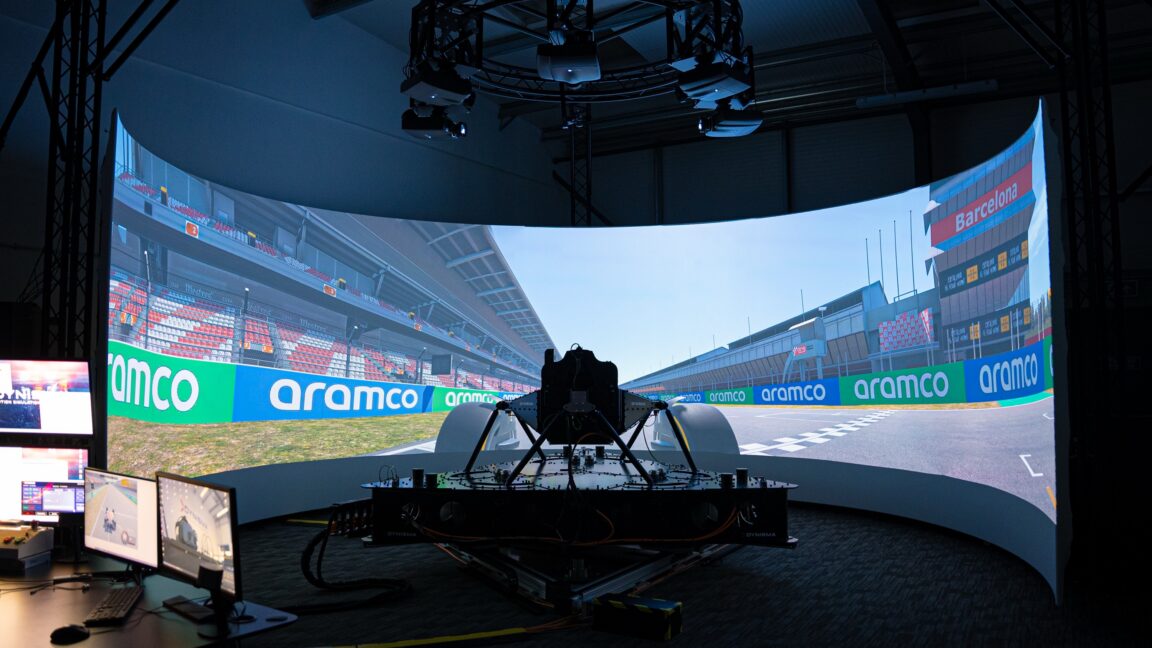
Latency, bandwidth, and fidelity all matter when you're chasing milliseconds.
The continuous pursuit of marginal gains in highly competitive fields like Formula 1, combined with advancements in simulation technology, drives ongoing investment in high-fidelity simulators.
This highlights the increasing reliance on advanced simulation and digital twins across industries to optimize performance, reduce physical prototyping, and accelerate development cycles, impacting engineering and R&D budgets.
The bar for simulation fidelity and responsiveness in performance-critical applications is continually being raised, pushing the boundaries of hardware and software integration.
- · Simulation technology providers
- · High-performance computing vendors
- · Motorsport engineering firms
- · Digital twin developers
- · Traditional physical testing methodologies
- · Less advanced simulation platforms
Further investment in advanced simulation hardware and software to gain competitive advantages in various sectors.
The transfer of these high-fidelity simulation techniques from specialized domains like F1 to broader industrial and engineering applications.
Enhanced efficiency and accelerated innovation cycles across multiple industries due to superior simulation capabilities reducing time-to-market.
This signal links to a primary source. Continuum Brief monitors and indexes it as part of the live intelligence stream — we do not republish source content.
Read at Ars Technica — Cars