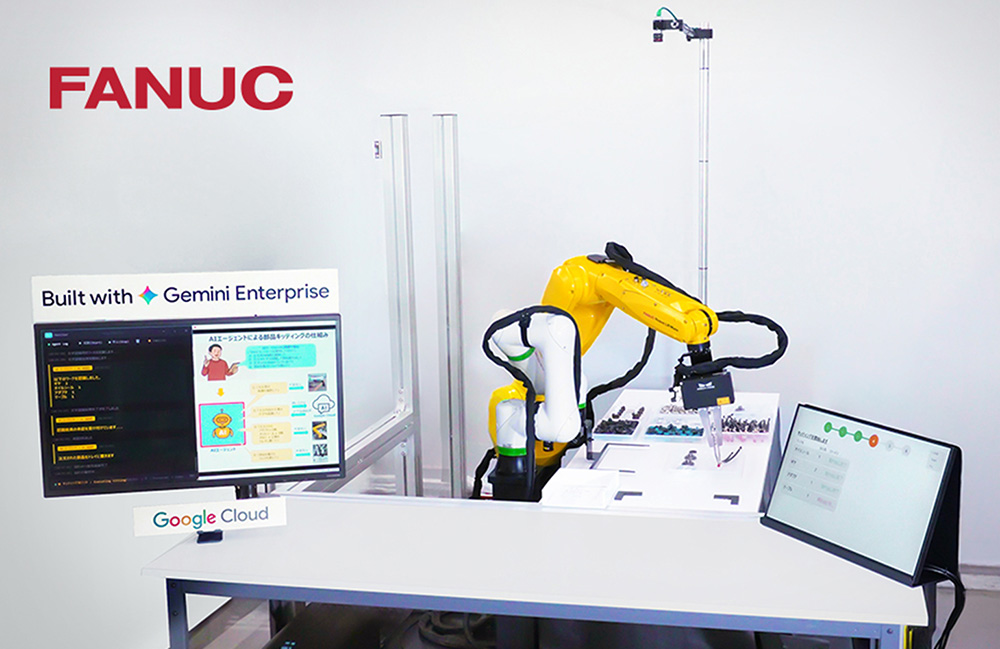
Since FANUC released its physical AI system at IREX in Tokyo, customer interest has grown rapidly, and it is working with Google and NVIDIA. The post FANUC partners with Google to advance physical AI in its robots appeared first on The Robot Report .
The increased maturity of physical AI systems and growing customer interest are driving these partnerships as industrial automation seeks more sophisticated capabilities.
This collaboration between major industrial robot manufacturers and leading AI developers accelerates true physical AI integration, moving beyond traditional automation to more adaptive and intelligent robotic systems.
Industrial robots will become more capable of autonomous decision-making and real-time environmental adaptation, eventually requiring less direct human programming and oversight.
- · FANUC
- · NVIDIA
- · Manufacturing sector
- · Companies relying on traditional fixed-automation solutions
- · Low-skilled industrial labor (long-term)
Industrial robots will gain enhanced perception and decision-making capabilities, making them safer and more versatile in complex environments.
The development and deployment costs for advanced robotic solutions will decrease, making them accessible to a wider range of industries.
This could lead to a significant acceleration in fully automated factories and supply chains, reshaping global manufacturing footprints and labor markets.
This signal links to a primary source. Continuum Brief monitors and indexes it as part of the live intelligence stream — we do not republish source content.
Read at The Robot Report