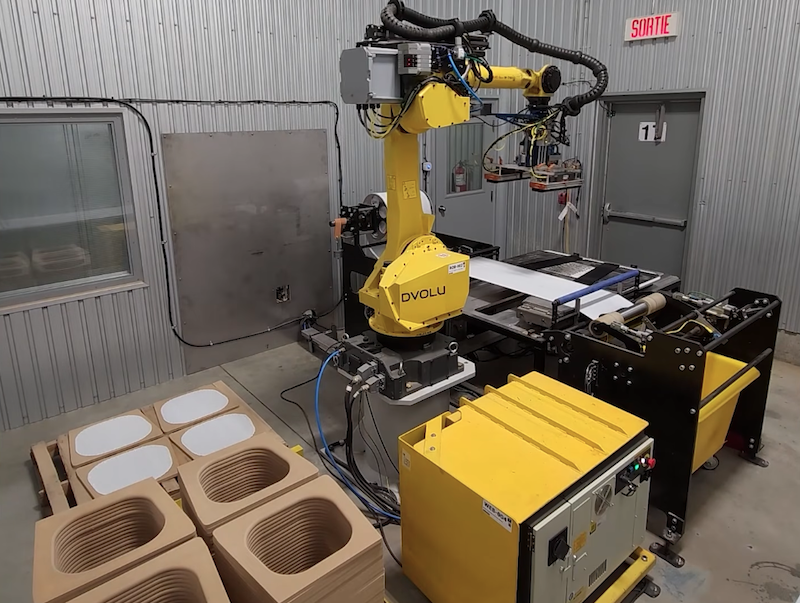
A Canadian furniture manufacturer has automated a traditionally labor-intensive upholstery process using a robotic work cell built around a Fanuc M-710iC industrial robot. Developed by Fanuc Authorized System Integrator Dvolu, the automated upholstery cell performs a series of tasks that have historically required skilled human workers, including fabric stretching, stapling, trimming, and palletizing chair seat […]
Advances in robotic dexterity (like the Fanuc M-710iC) and AI vision systems are now mature enough to automate historically complex manual tasks in manufacturing, making such solutions commercially viable.
The successful automation of a difficult, skilled manual task in furniture manufacturing demonstrates the broader applicability of advanced robotics to other labor-intensive industries, reducing reliance on human labor for repetitive and dangerous jobs.
Previously unautomatable tasks requiring fine motor skills and adaptive handling can now be performed by robotic systems, expanding the scope of industrial automation beyond simple pick-and-place operations.
- · Fanuc (robotics)
- · Dvolu (system integrators)
- · Advanced manufacturing
- · Furniture manufacturers
- · Skilled manual upholstery workers
- · Labor-intensive manufacturing sites with high wage costs
Increased efficiency and cost reduction in furniture manufacturing.
Accelerated adoption of similar complex robotic applications across other light manufacturing sectors.
Potential for reshoring manufacturing to countries with higher labor costs due to reduced wage dependency.
This signal links to a primary source. Continuum Brief monitors and indexes it as part of the live intelligence stream — we do not republish source content.
Read at Robotics & Automation News